




By Mark Rummel
We Americans are literally biting the hands that feed us.
None of the food we consume each day would exist without the talents, efforts and perseverance of farmers and ranchers across the United States.

Since farmers here and around the world make our food possible, they earn most of the money we pay for our daily bread, right?
Not by a long shot.
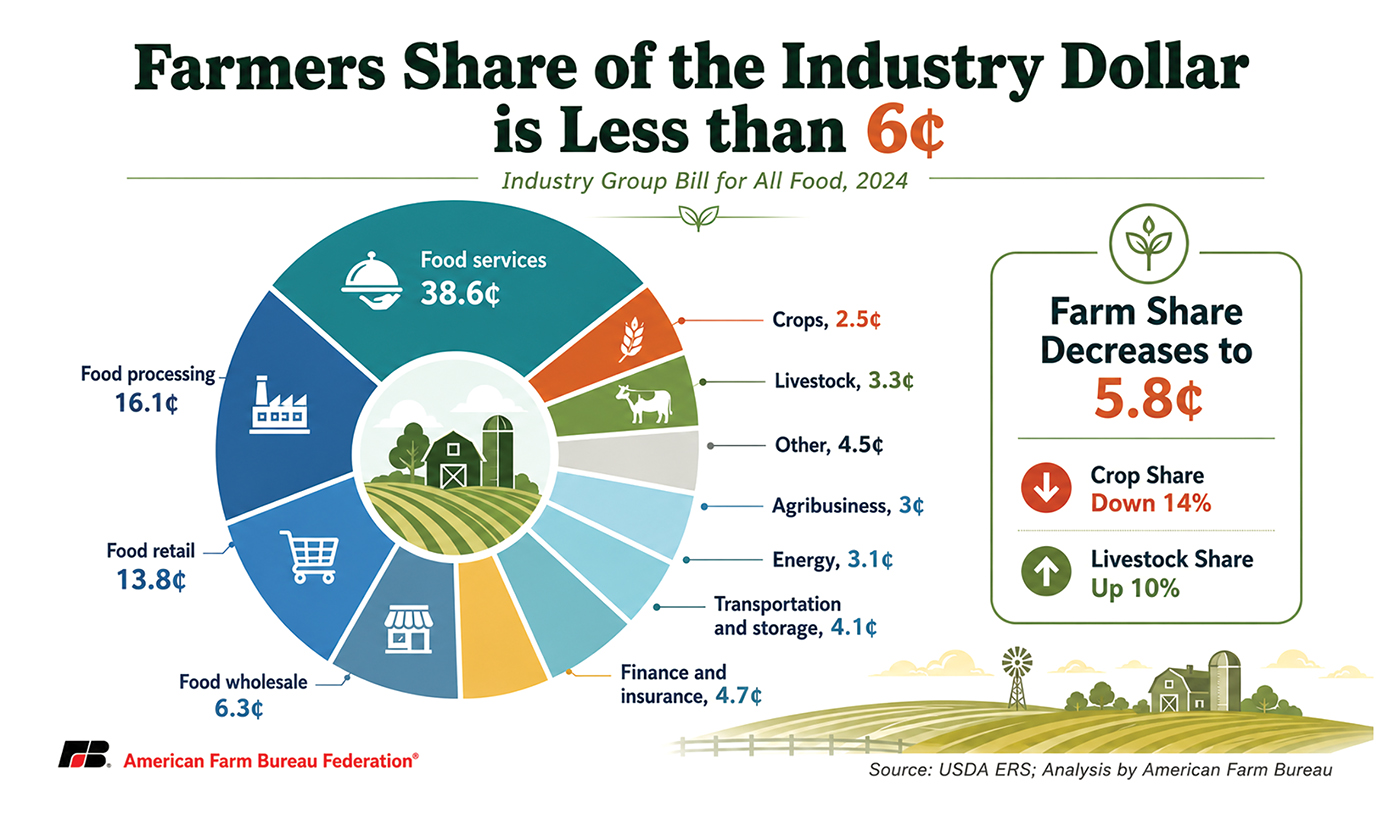
In 2024, the U.S. Department of Agriculture (USDA) estimated that farmers and ranchers received a combined 5.8¢ of every dollar spent on food. That means less than 6¢ of every dollar we spend at the grocery store or restaurants actually reaches the farm, after accounting for production expenses.










While farmers and ranchers produce the raw commodities that make food production possible, about 94¢ of every food dollar goes to others after it leaves the farm. That means the factories that process those raw foods, package them, distribute them and move them to grocery store shelves or restaurant kitchens make much more than the people who planted, grew and harvested the crop.
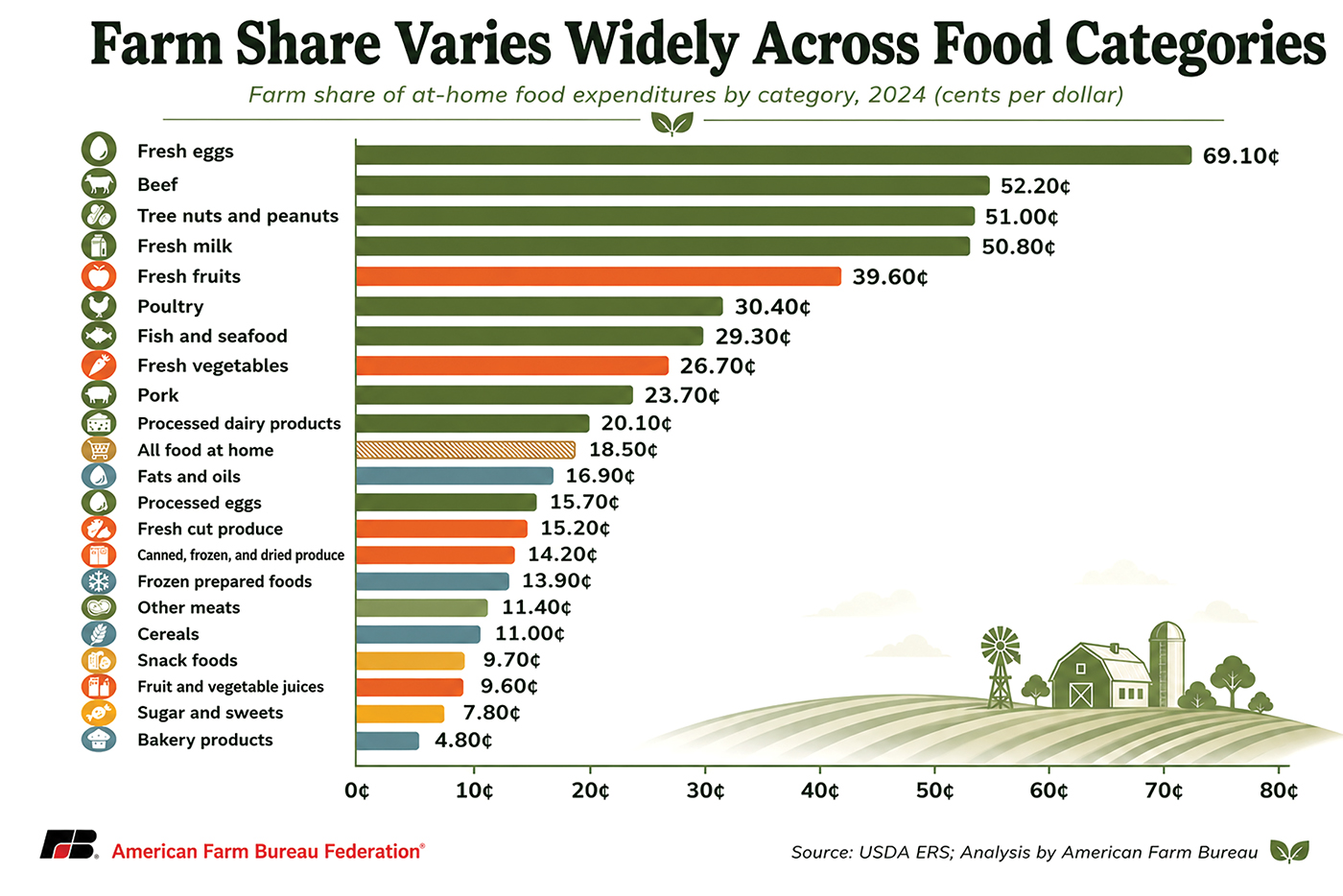
So, the transportation company that delivers food to grocery stores makes almost as much as the farmer who made it all possible. Sometimes, the box holding corn flakes makes more profit than the food inside!
A century ago, one-third of all Americans lived (and worked) on farms, to produce food for themselves and to sell. Today, fewer than 2% of Americans are farmers and ranchers, or about 3 million people. Back then, every farmer fed seven people. Thanks to improved technology, better equipment and improved seeds, today’s farmer feeds 125 people, an 18-fold increase in productivity.
The share of food spending farmers receive has been shrinking for decades, USDA figures show. As recently as 1977, farmers received 31% of the total food dollar. But that figure has steadily declined since then.
The marketing bill — that 94¢ of food costs that doesn’t go to farms — covers processing, transportation, packaging, wholesaling, retailing and food service. As consumers increasingly prefer prepared foods, that share will keep rising. We prefer foods that have been cooked, such as rotisserie chickens, sliced melons and pre-cooked bacon, to save time — but these things cost us money.
The folks who grow our food and raise our cattle receive a larger share of the food dollar on the foods sold to stores, as opposed to what is ordered in restaurants. And yet, nearly 25% of all meals today are eaten out or delivered ready-to-eat. Still, three-fourths of meals are still cooked at home.
As we demand convenience and better nutrition in the food we choose, other pressures are exerted on our ag commodities. Forty years ago, virtually no one grew corn specifically for biofuels or bioplastics. Those farming pressures will continue.
When people shop at the growing number of farm markets in our towns, they get fresher food and often buy directly from the farmers who grew it. That’s a hopeful sign. Everyone seems to win. But don’t blame our farmer friends for the exploding food prices shoppers see each day. Farm incomes are being squeezed, and while they will keep boosting efficiency, U.S. farming remains a rough row to hoe.

Mark W. Rummel is a lifelong news guy who has worked in communications since 1972. Along the way, the Fenton, Michigan, resident and his wife Sally even worked for the Walt Disney Company. They opened and operated the Mancino’s of Fenton restaurant in 1998 and now enjoy traveling and spoiling their grandkids. Mark always appreciates your comments at MarkWRummel@gmail.com