



By Stacy Sawyer
Director of Communications at Hamilton Community Health Network
The hospital stay may end, but the work of taking care of your heart is just beginning.

For patients recovering from a heart attack or stroke, the road ahead can come with a lot of questions. What medications do I need? How active can I be? What should I eat? And perhaps the biggest question of all: How do I keep this from happening again?
Those are questions Osman Mukhtar, MD, hears regularly at Hamilton Community Health Network’s North Pointe Clinic.
Dr. Mukhtar treats many patients at Hamilton Community Health Network’s North Pointe Clinic who are living with heart disease or recovering after a heart attack or stroke. With a background and research interest in cardiovascular health, including research involving the coronary arteries, he understands that what happens after a diagnosis can be just as important as what happened before it.










We can’t change what happened in the past. But we can look at what we can do today to reduce the risk of another problem in the future.”
— Osman Mukhtar, MD,
Hamilton Community Health
Network’s North Pointe Clinic
What Happens Now?
Coming home after a heart attack or stroke can feel overwhelming. There may be new medications, follow-up appointments with several doctors and a long list of things you’re supposed to change.
“Patients sometimes think they have to completely change their lifestyle,” he says. “Small changes can make a difference. We want to find something that is realistic for that individual patient.”
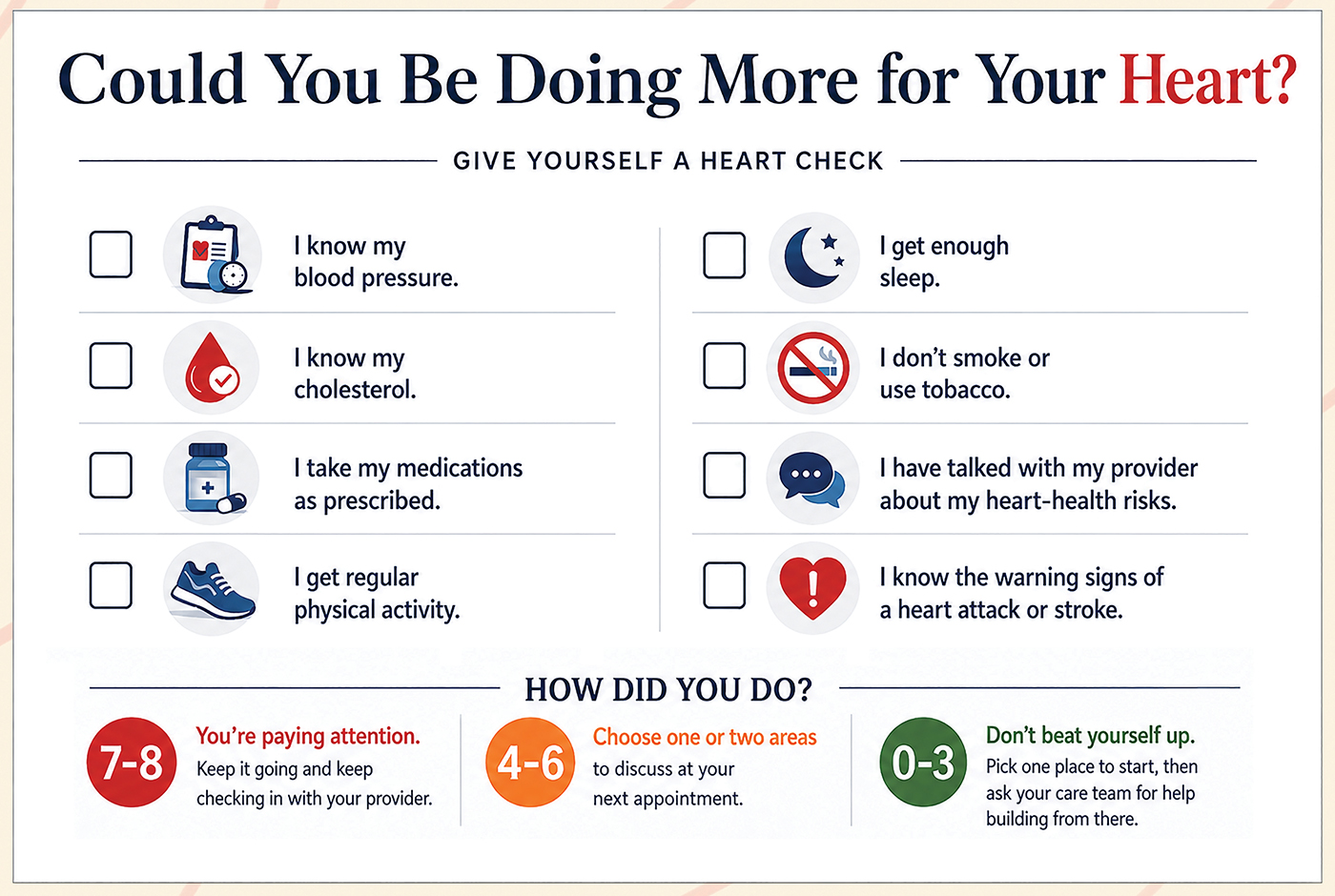
The American Heart Association’s Life’s Essential 8™ focuses on eight areas that can improve cardiovascular health for everyone, not just survivors. Those eight essentials are eating better, being active, quitting tobacco, getting enough sleep, managing weight, controlling cholesterol, managing blood sugar and managing blood pressure.
That doesn’t mean you have to go from the couch to a marathon overnight. It can mean taking a daily walk, cutting back on salty foods such as chips, canned soups and lunchmeat sandwiches, continuing to work toward quitting tobacco if you smoke, and taking your medications exactly as prescribed.
The goal isn’t perfection. It’s making the next choice a little healthier than the last one.

Don’t Let a Diagnosis Define You
A heart attack or stroke can make you worry about what comes next. But Dr. Mukhtar wants patients to focus on what they can control.
“Your diagnosis is part of your medical history, but it doesn’t have to define you,” he says. “We want patients to understand that they can still take steps to improve their health.”
Maybe your motivation is watching your grandchildren grow up, getting back to a favorite hobby or simply having more energy for everyday life. Whatever it is, make it your reason to keep going.
You can’t rewrite what happened to your heart, but you can have a say in what comes next. With the right care, the right support and a commitment to your health, there is still a lot of life ahead.