










By Mark Rummel
Americans eat pigs, cows, chickens, and turkeys by the millions each year, but our Western culture tells us not to eat dogs and cats. Why do we choose to dine on some animal proteins while deciding not to eat others?
Author Jonathan Safran Foer explores those questions in his 2009 book Eating Animals. A 2018 documentary of the same name also examined the topic, particularly in the context of the rise of factory farming in America.
The book grew out of Foer’s personal decision about what to feed his newborn son. That prompted a years-long examination of the foods we choose to eat. He explored the ethics of eating animals and how industrial agriculture has contributed to the decline of family farming traditions. We humans choose to love some animals while consuming others. About 99% of people would never consider eating dogs — except, perhaps, a backyard hot dog on the grill.
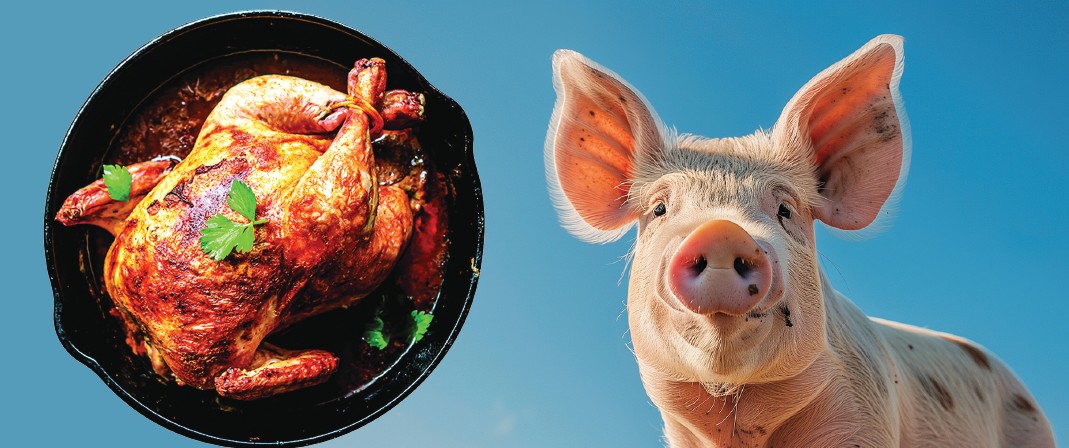
But pigs are just as intelligent as dogs and cats. Why do we find it acceptable to raise, slaughter, and eat swine? Comedian Johnny Carson often joked that pigs are among the smartest animals — yet our final encounter with them is often on a grill or between two slices of bread.
Some cultures do eat domesticated animals, especially where protein has historically been scarce. In those places, people have often relied on whatever food sources were available to combat hunger.
Experts say there is no essential biological difference between the animals many people eat — birds, cattle, fish, and pigs — and those many Western cultures generally avoid eating, such as horses, dogs, and cats.
Why, and how, do we make those choices?
To give people something to chew on, Foer even presented a recipe for “Stewed Dog, Wedding Style” during an interview on NPR’s All Things Considered. At the time, dog meat was still consumed in parts of Korea. In some places, young dog was considered a delicacy. Is that really much different from our own acceptance of veal — meat from young cattle?
Today, eating dogs is rapidly disappearing in South Korea. A law passed in 2024 bans the breeding, slaughter, and sale of dogs for human consumption, with the practice scheduled to end completely after a three-year transition period. Younger generations, in particular, overwhelmingly oppose the practice.
It is illegal to slaughter dogs or cats for human consumption anywhere in the United States under a federal law passed in 2018. Horse meat, however, occupies a different legal and cultural space. While private consumption is generally not prohibited in most states, federal restrictions have effectively ended commercial horse slaughter for human consumption in the U.S.
We humans choose to love some animals while consuming others.

Horses, for some reason, are viewed differently in various parts of the world. Horse meat remains a delicacy in parts of Asia, South America, and Europe. However, it remains a strong cultural taboo in English-speaking countries such as the United States, Australia, and the United Kingdom. During World War II, horse meat frequently appeared on dinner tables throughout much of Europe because food shortages left families with few alternatives. Americans also consumed more horse meat during that era than they do today.
The Japanese delicacy basashi is thinly sliced raw horse meat, often served sashimi-style. Thousands of restaurants across Japan serve horse meat, particularly in regions where it remains a traditional specialty.
Foer does not insist that everyone become vegan. Instead, he encourages readers to think critically about the choices behind what they eat, weighing tradition, taste, and convenience against concerns such as animal welfare, environmental impact, and the public health risks associated with factory farming. Since his book’s publication, conversations about food ethics and sustainability have only grown.
Perhaps the true delicacy is not what we choose to eat, but being thoughtful about why we make those choices.

Mark W. Rummel is a lifelong news guy who has worked in communications since 1972. Along the way, the Fenton, Michigan, resident and his wife Sally even worked for the Walt Disney Company.They opened and operated the Mancino’s of Fenton restaurant in 1998 and now enjoy traveling and spoiling their grandkids. Mark always appreciates your comments at MarkWRummel@gmail.com