











By Keegan Deloney
Atherton’s schoolhouse
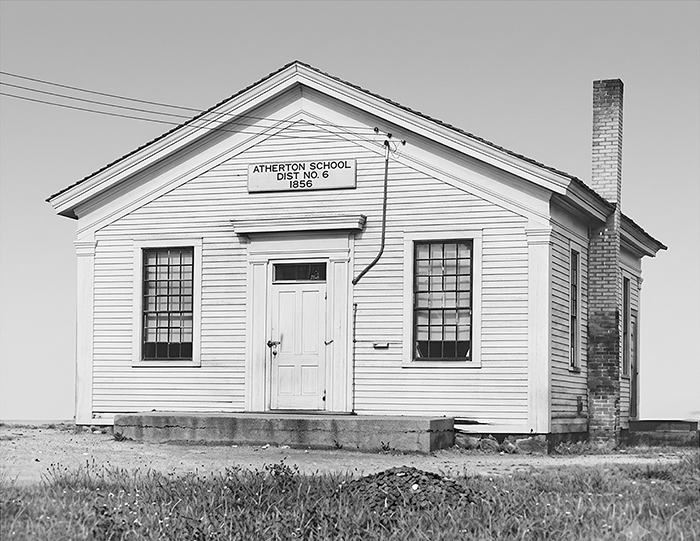
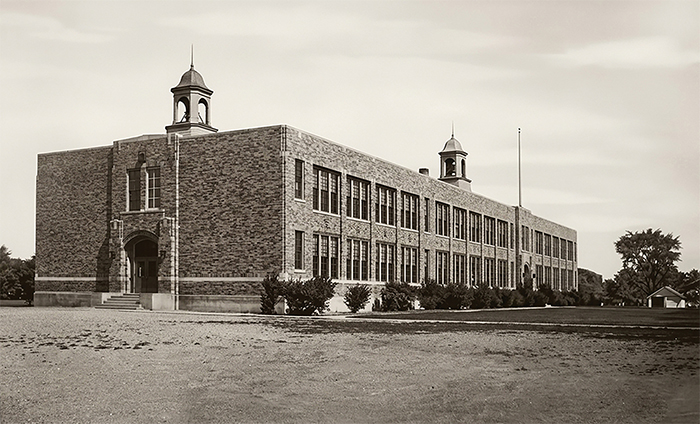
Atherton continued as a one-room schoolhouse for the next 100 years, occasionally serving as a church.

Atherton’s schoolhouse
Clio high school
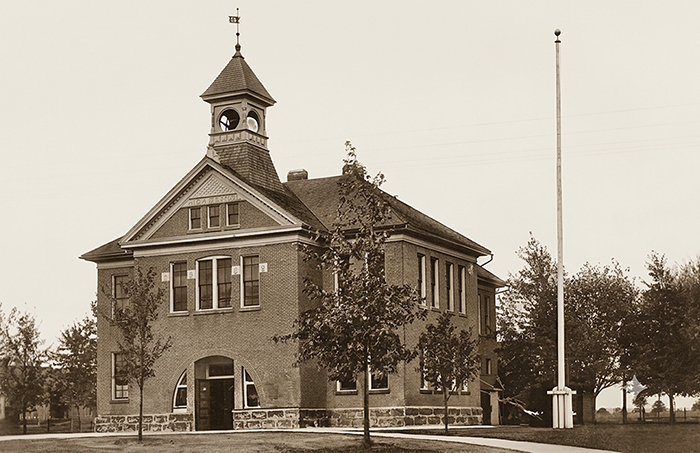
Clio built its first school in 1888 during a period of exceptional growth.


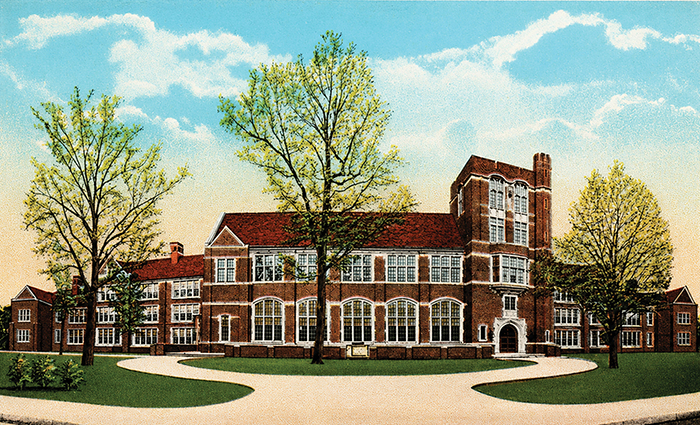
Flint central high school
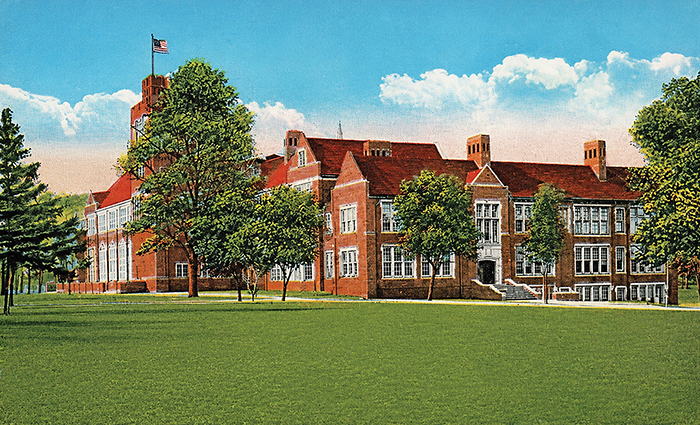
During the early 20th century, Flint became a national leader in the “community school” movement.
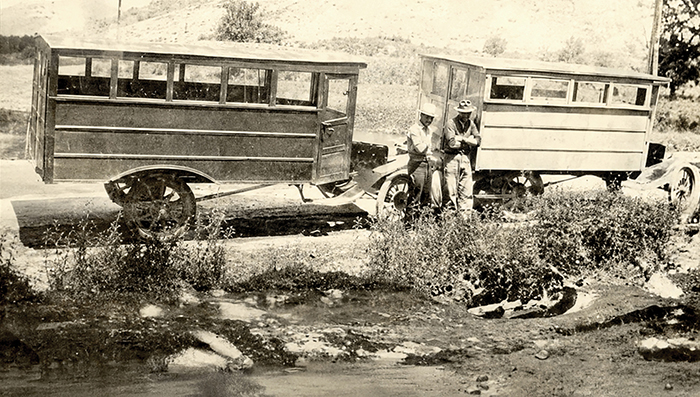
Grand Blanc’s first schoolbuses
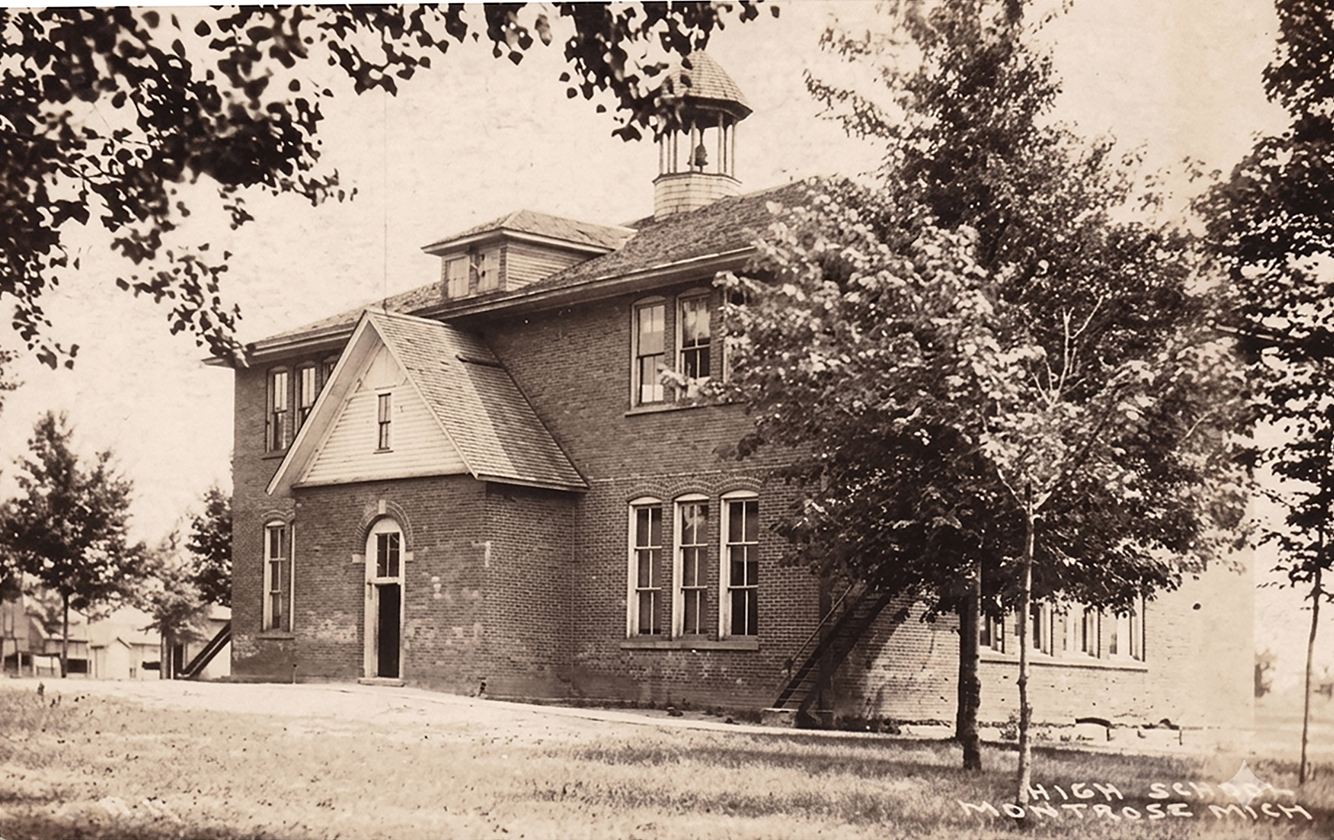
This is the front of Montrose High School printed on a 1924 postcard.
From 1903 through 1904, local school districts were consolidated into one district and one building, making Grand Blanc the first district in Michigan to accomplish such a feat
Schools have never been just buildings for teachers and students. They have been gathering places, focal points of their communities, and part of local history.
“The sense of community among our staff, students, and families,” said Grand Blanc Superintendent Trevor Alward when asked what he loves most about his school district. “Our staff have their kids in the district, and we all share milestones in our families’ lives together.”
The school districts below have left lasting impacts on individuals and communities alike for 100 years or more. This is their celebration.
Atherton Community Schools
The Atherton school district began as a one-room schoolhouse in 1836 in the farming settlement of Atherton, one year before Michigan officially became a state. It continued as a one-room schoolhouse for the next 100 years, occasionally serving as a church. Little is known about the school during that time. It was closely connected to Flint Township reports and other area schools, simply being referred to as “District 6” in its earliest days. However, none of that diminishes Atherton’s legacy or the pride its community has in it. This year marks its 190th anniversary.
Bendle Community Schools
John Bendle and his wife, former members of the Atherton settlement, were the land donors and namesakes of this school that first opened in 1925. Bendle High School followed roughly 30 years later and served students until 2008, when a new building replaced it. Although voters considered consolidating Atherton, Bendle, and Bentley in 2003, the proposal did not pass. Bendle continues to flourish as an independent school district and is also the alma mater of NFL veteran Paul Krause.
Bentley Community Schools
Bentley Community Schools, like many of the districts on this list, had humble beginnings as a one-room school after Seymour Bentley donated the land in 1914. Located in Burton, the district gradually expanded to include additional buildings, including Barhitte Elementary, named for longtime teacher and Parent-Teacher Association organizer Ruth M. Barhitte; the current high school, established in 1958; and the Bentley Little Bulldog Learning Center, which opened in January 2026 after McLaren Health donated the building.
Clio Area Schools
Clio built its first school in 1888 during a period of exceptional growth. It expanded again in the early 1900s as the number of school-aged children increased, adding a high school to the existing Clio School. By 1928, Clio had grown enough to officially become a fifth-class city with a population between 750 and 2,000 residents. A new elementary school soon followed. As the community continued to grow, so did its schools, with additional high schools, one of which later became Carter Middle School, and several new elementary schools.
Davison Community Schools
Among the many one-room schoolhouses dating back to 1850, Davison’s main school was a two-story building heated by wood stoves in the late 1880s. It officially began serving all 12 grades in 1907, but its life was cut short when fire destroyed the building in March 1930. After local taxpayers initially resisted funding a replacement, Davison built what became Central Elementary in 1932, followed by Hill Elementary in 1958. During the late 1900s, more than five additional school buildings were constructed. Today, the site of Davison’s original two-story school is home to Davison City Hall.
Fenton Area Public Schools
Fenton’s first schoolhouse opened in 1838, one year after settlers William F. Fenton and Robert LeRoy purchased the land and water rights from original founder Clark Dibble. A high school known as the Central Building opened in 1861. The district expanded in 1956 when voters approved a bond for additions and two new elementary schools, North Road and State Road, which opened the following year. A new Fenton High School was completed in 1969. Rather than disappearing into history, the Central Building found new life as the Ellen Street Campus, home to the World of Wonder preschool, preserving an important piece of Fenton’s educational legacy.
Flint Community Schools
Flint’s public school system traces its roots to the mid-1800s, growing alongside the city as it evolved into one of America’s great industrial centers. During the early 20th century, Flint became a national leader in the “community school” movement, where schools focused not only on students’ educational needs but also on their social, recreational, and community well-being. The model emphasized meeting the needs of the entire community while bringing people together through education.
Unfortunately, declining enrollment and a lack of funding led Flint Central High School, which first opened in 1923, to close in 2009. But that is not the end of its story. The Charles Stewart Mott Foundation has announced plans to build a new high school on the site, once again rallying the Flint community together. The school is expected to open in 2028.
Flushing Community Schools
Flushing’s educational history dates to 1841, when citizen commissioners established the boundaries of School District No. 5. Thirty-four years later, Flushing High School was founded as the community’s oldest public high school. Today, the district includes seven academic buildings serving approximately 4,130 students.
Grand Blanc Community Schools
According to district historian Max Harrison, Edmund Perry built Genesee County’s first school on his property in 1830. It was also the first school between the settlements in Pontiac and the Straits of Mackinac. From 1903 through 1904, local school districts were consolidated into one district and one building, making Grand Blanc the first district in Michigan to accomplish such a feat.
That spirit of community continues today.
“Grand Blanc continues that legacy by remaining committed to improving outcomes for our kids,” Alward said. “Our students have gone on to do amazing things, becoming Olympians, judges, doctors, attorneys, and educators.”
Kearsley Community Schools
Kearsley’s educational history began before the Civil War when its first school opened at Genesee and Richfield roads. Although the building burned in 1929, the district quickly rebuilt a larger school that same year. In 1940, four local districts merged to form the Kearsley Rural Agricultural School District, laying the foundation for today’s Kearsley Community Schools.
Linden Community Schools
Linden’s first schoolhouse and first grist mill were both built by L.B. Hyatt on Main Street. After the mill burned in 1840, Hyatt’s wife, Frances, a schoolteacher, convinced him and community leaders to relocate the school to South Bridge Street. Between 1870 and 1871, community donations of labor and materials helped construct a two-story brick schoolhouse. Over the years, it served as both a high school and later the district’s administrative offices before being demolished in 2002 despite community opposition. Today, a historical marker near North Bridge Street preserves its memory.
Montrose Community Schools
Montrose’s educational legacy began in 1845, not in a schoolhouse, but in George Wilcox’s home, where the community held its first school meeting. Plans for the first school building were scheduled to begin that summer. After that building was destroyed by fire in 1924, a new facility housing all 12 grades opened in 1926.
As enrollment grew, three school buildings were moved to Hickory Street in 1948. One of them, the Slade School, later became the Montrose Historical Museum, opening on October 23, 1983. When Kuehn-Haven Middle School opened for the 1978 school year, the 1926 school became an elementary school before retiring in 1981.
The Legacy Continues
This list includes only a fraction of the history each of these schools possesses, just as it barely scratches the surface of the histories of the many other schools throughout Genesee County.
Many of these stories share common themes, but their impact on countless lives, whether 100 years ago or just this past school year, cannot be denied. They shaped us. They continue to shape us. And they will continue to shape future generations.
We can only imagine what legacy the next century of Genesee County’s schools will leave.