




The mayor of New York City recently announced the creation of city-owned grocery stores to make food more affordable for city residents. The first is scheduled to open in late 2027. Essential goods will be priced 30% below market, while other goods will be priced at market rates.
Consumers are understandably frustrated with COVID-era food price inflation that continues to this day. However, city-owned grocery stores do not address the underlying costs driving food prices and will likely make the problem worse.
Grocery prices have risen due to broader price inflation, which peaked at a 40-year high in 2022 and remains above the pre-COVID trend. Inflation increases the cost of supplies for food producers and grocery store owners, which is then passed on to consumers through higher prices.

A future mayor is likely to face a significant budget deficit and find that closing city-owned grocery stores selling goods at a steep loss may be a feasible way to help close that deficit.
Owning a grocery store is a low-margin business, with the profit margin of a typical store running at approximately 2%. Even assuming a city-owned grocery store could operate as efficiently as a private one, eliminating profit would only reduce grocery prices by 2%. This is a drop in the bucket compared to the nearly 30% increase in grocery prices the United States has experienced since the pandemic.
Undercutting private grocery stores by 30% on key items presents a couple of possibilities.










First, the supply of these items could be limited. In this case, they would be sold to the first people in line, resulting in excessive queueing and leaving those at the back of the line without access. This has been a feature of state-owned grocery stores in centrally planned economies.
Second, the city could supply whatever quantity of these items consumers want to buy, with taxpayers underwriting the cost of maintaining the 30% discount.
This second possibility creates some problems. Private grocery stores in the city will be unable to compete with city-owned grocery stores selling key staples at a loss with taxpayer support. Since city-owned grocery stores will be selling other items at market prices, consumers will have no incentive to buy those same items from private stores. Given the high cost of running a private grocery store in New York City, many of these stores will likely fail.
The New York City budget remains in a precarious position. The city entered the fiscal year with a $12 billion budget gap, which it closed in part with aid from the State of New York and by delaying payments into the city’s pension fund. These are not sustainable long-term strategies. A future mayor is likely to face a significant budget deficit and find that closing city-owned grocery stores selling goods at a steep loss may be a feasible way to help close that deficit.
If many private grocery stores have closed in the meantime, as is likely, this could result in even higher prices and fewer choices for consumers than is currently the case.
Removing profit and subsidizing costs does not eliminate costs; it simply changes who pays them while potentially inflicting long-term damage on the market.
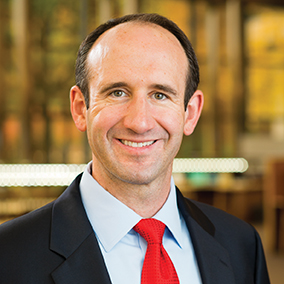
Dr. Christopher Douglas came to the University of Michigan-Flint in 2006. He earned a B.S. in Electrical Engineering and a B.S. in Economics from Michigan Technological University in 2001, and his Ph.D. in Economics from Michigan State University in 2007. As Professor of Economics, he teaches Principles of Microeconomics, Principles of Macroeconomics, International Economics, Public Finance and Sports Economics.