






By almost any measure, childhood has changed dramatically in the past 20 years. Many children now spend hours each day using smartphones, tablets, computers, televisions, and gaming devices. While technology offers educational benefits and convenience, a growing body of research suggests that excessive recreational screen time may interfere with healthy brain development, learning, emotional regulation, sleep, and mental health.
The question is no longer whether screen time affects children. The more important question is how much, at what ages, and what parents can do to create healthier habits.
The Developing Brain Was Not Designed for Constant Screens
Childhood and adolescence are periods of rapid brain development. During these years, the brain strengthens neural pathways that support language, attention, memory, emotional regulation, and decision-making.

Researchers involved in the National Institutes of Health’s Adolescent Brain Cognitive Development (ABCD) Study, which follows more than 11,000 children across the United States, found that children who reported more than two hours of daily screen time scored lower on thinking and language tests than children with less screen exposure. Researchers also observed differences in brain structure among some children reporting very high levels of screen use.
Other ABCD research has linked higher screen time with sleep disruption, changes in brain structure, and increased psychological symptoms during adolescence.
Brain Development Effects Associated with Excessive Screen Time |
|
| Area of Development | ResearchFindings |
| Attention | Increased risk of attention difficulties and ADHD-like symptoms. |
| Language & Learning | Lower performance on language and thinking assessments. |
| Memory | Higher early-childhood screen exposure associated with weaker working memory later in childhood. |
| Sleep | Increased screen use is associated with shorter and poorer-quality sleep. |
| Emotional Regulation | Greater risk of anxiety, depression, and behavioral problems. |
Source: National Library of Medicine
The Screen Time and Mental Health Connection
One of the strongest concerns among researchers involves emotional and mental health.










A large longitudinal study involving more than 9,500 children found that higher screen time at ages 9 and 10 predicted higher levels of depressive symptoms, attention problems, conduct issues, and other mental health challenges during later follow-up periods. The strongest relationship was observed with depression.
In another large analysis of more than 50,000 children and adolescents, researchers found that children spending four or more hours per day on screens had significantly higher risks of anxiety, depression, behavioral problems, and ADHD symptoms. Reduced physical activity and disrupted sleep explained part of the relationship.
Even more striking, a recent meta-analysis combining 117 studies and more than 292,000 children found consistent links between greater screen use and emotional difficulties such as anxiety, depression, aggression, and lower self-esteem.
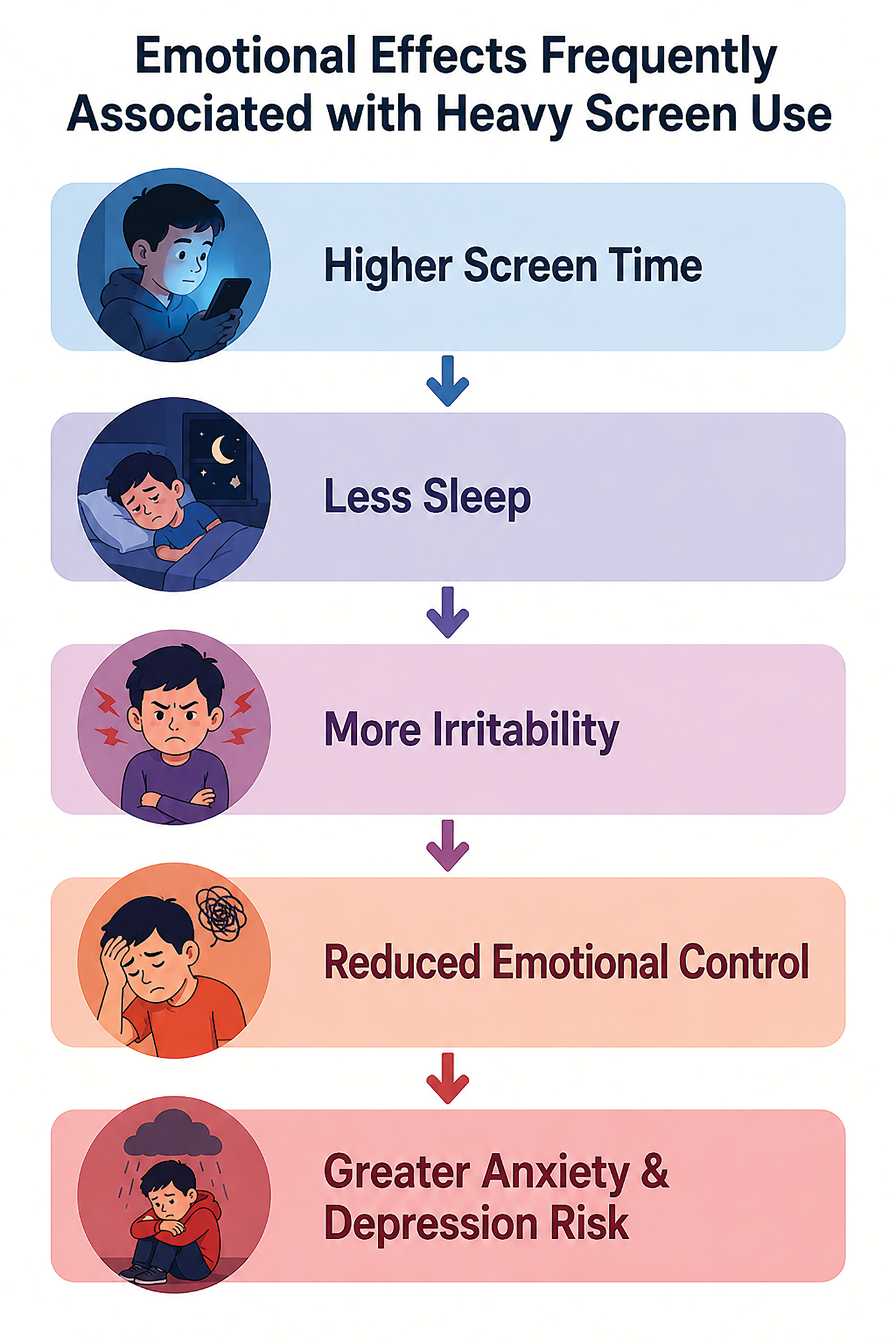
Source: American Psychological Association
Researchers believe multiple factors contribute:
→ Less face-to-face interaction
→ Reduced physical activity
→ Sleep disruption
→ Exposure to social comparison on social media
→ Constant stimulation that makes everyday activities feel less rewarding
Sleep: The Hidden Casualty
Sleep may be one of the most important pieces of the puzzle.
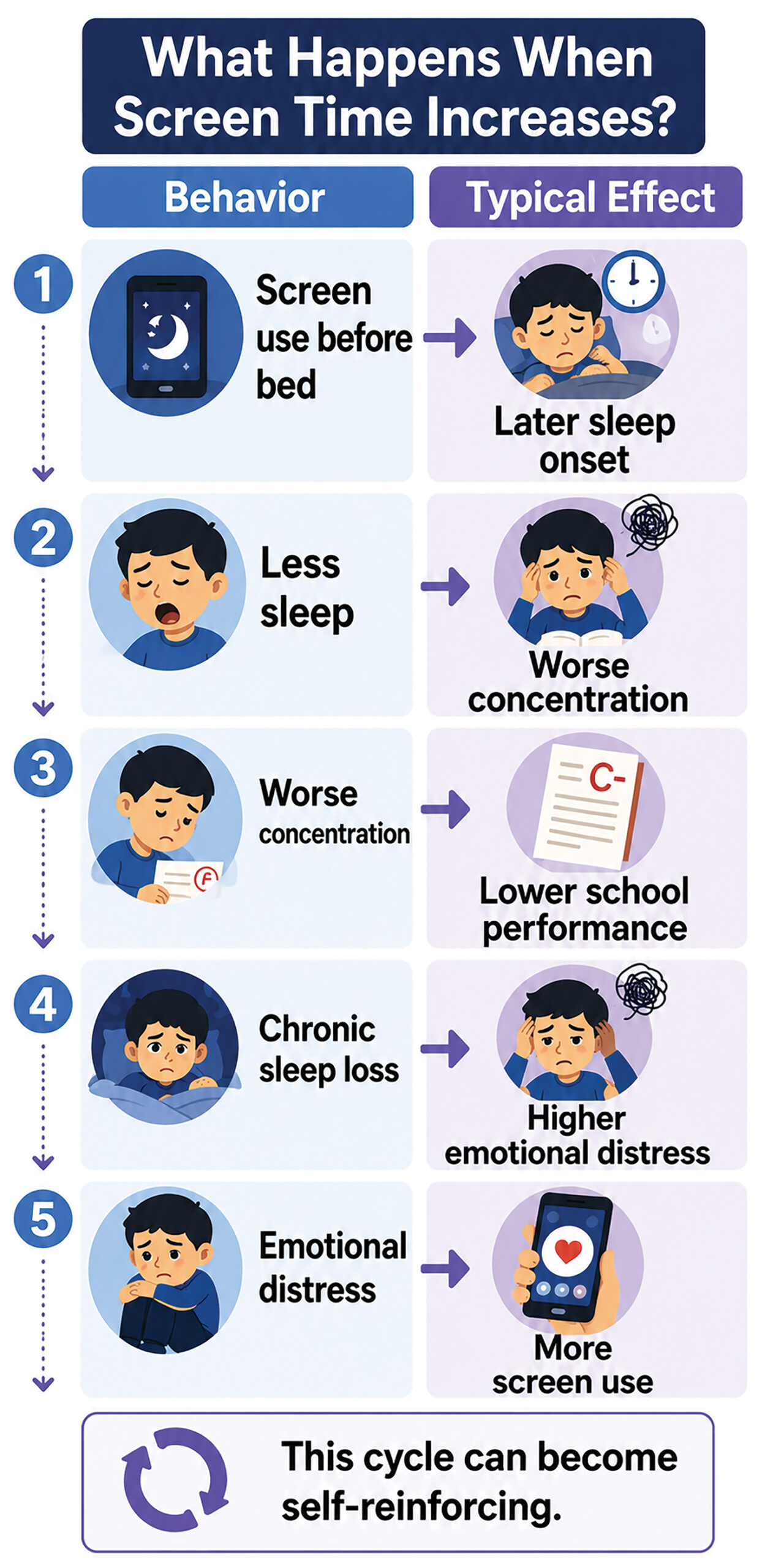
Source: American Psychological Association
Many children use screens shortly before bedtime. The stimulation from videos, games, and social media can delay sleep onset and reduce sleep quality. Poor sleep has been linked to weaker memory, lower academic performance, increased emotional reactivity, and higher rates of anxiety and depression.
Researchers increasingly believe that some of the negative effects attributed to screen time may actually occur because screen use displaces sleep.
What Happens When Parents Take Charge?
The encouraging news is that the research is not all negative.
Studies consistently show that children benefit when parents actively manage screen use. Researchers note that emotional and behavioral problems and screen use often influence each other, meaning positive changes can work in reverse as well.
Parents who establish reasonable limits often report:
→ Better sleep
→ Improved attention
→ More family interaction
→ Increased outdoor play
→ Better mood stability
→ Improved school performance
→ Greater creativity and independent play
Many pediatricians observe that children frequently become calmer and more engaged after an initial adjustment period when recreational screen time is reduced.
Realistic Solutions for Busy Families
Many parents hear recommendations to reduce screen time and immediately think, “That sounds great, but who has the time?”
The goal is not perfection. It is progress.
- Create Screen-Free Zones
Designate certain places where screens are never used:
→ Dinner table
→ Bedrooms
→ Family gatherings
→ Car rides under 20 minutes
This change alone can significantly increase family conversation.
- Protect Sleep First
If reducing screen time feels overwhelming, start with bedtime.
Experts frequently recommend:
→ No screens for at least one hour before bed
→ Charging devices outside bedrooms
→ Using traditional alarm clocks instead of phones
- Replace, Don’t Just Remove
Children often struggle when screens disappear without alternatives.
Replace screens with:
→ Board games
→ Sports
→ Bike rides
→ Reading
→ Art projects
→ Building toys
→ Family walks
- Use the “Earned Screen Time” Model
Many families find success when children earn recreational screen time through:
→ Homework completion
→ Chores
→ Reading
→ Physical activity
- Model the Behavior
Children notice parental habits.
A parent asking a child to put down a tablet while scrolling endlessly through a phone sends a mixed message. Family-wide limits tend to work better than child-only restrictions.
The Goal Is Balance, Not Elimination
Technology is not inherently harmful. Children use screens for learning, communication, creativity, and entertainment. The evidence suggests the greatest concerns arise when screen use becomes excessive, displaces sleep and physical activity, replaces human interaction, or dominates a child’s daily life.
The healthiest families are not necessarily those that ban screens entirely. Rather, they are families that ensure screens remain a tool instead of becoming the center of childhood.
When parents establish boundaries, encourage real-world experiences, prioritize sleep, and model healthy habits, children gain opportunities that no device can fully replicate: meaningful relationships, imaginative play, physical activity, emotional resilience, and the chance to develop into healthy, well-rounded adults.
The research increasingly suggests that those experiences are not just beneficial—they are essential.