






Many parents seek chiropractic care for their children in hopes of improving comfort, mobility, posture, athletic performance, or overall well-being. Pediatric chiropractic care has grown in popularity over the past two decades, with many chiropractors offering services for infants, children, and teenagers.
However, before deciding whether chiropractic care is appropriate for a child, parents should understand what current research does and does not support.
What Is Pediatric Chiropractic Care?
Chiropractic care focuses on the diagnosis and treatment of musculoskeletal conditions, particularly those involving the spine, joints, muscles, and nervous system. Chiropractors use a variety of techniques that may include:

→ Spinal manipulation or adjustment
→ Joint mobilization
→ Soft tissue therapy
→ Stretching exercises
→ Postural training
→ Movement and exercise recommendations
→ Ergonomic and lifestyle counseling
Pediatric chiropractic techniques are generally modified to use significantly less force than those used on adults.










What Conditions Have the Strongest Evidence?
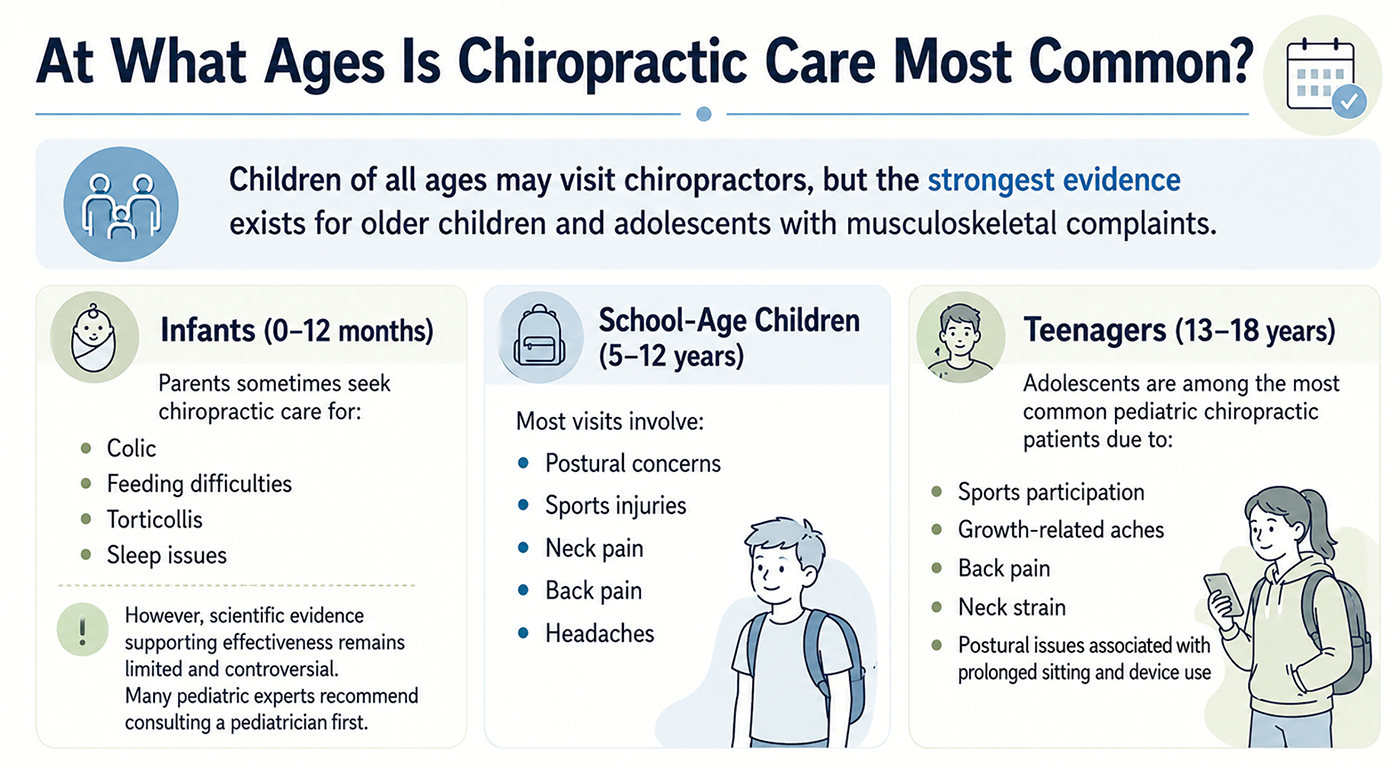
The best-supported use of chiropractic care in children involves certain musculoskeletal complaints.
Research reviews have found some evidence that spinal manipulation and manual therapies may help certain children and adolescents with:
→ Mechanical neck pain
→ Back pain
→ Some types of headaches
→ Sports-related joint and muscle discomfort
→ Certain movement and mobility limitations
These are conditions involving the muscles, joints, and spine, which fall directly within the traditional scope of chiropractic practice.
For adolescent athletes, chiropractic care is sometimes used alongside physical therapy, stretching programs, strength training, and sports medicine treatment to help manage musculoskeletal injuries.
What Do Major Reviews Say?
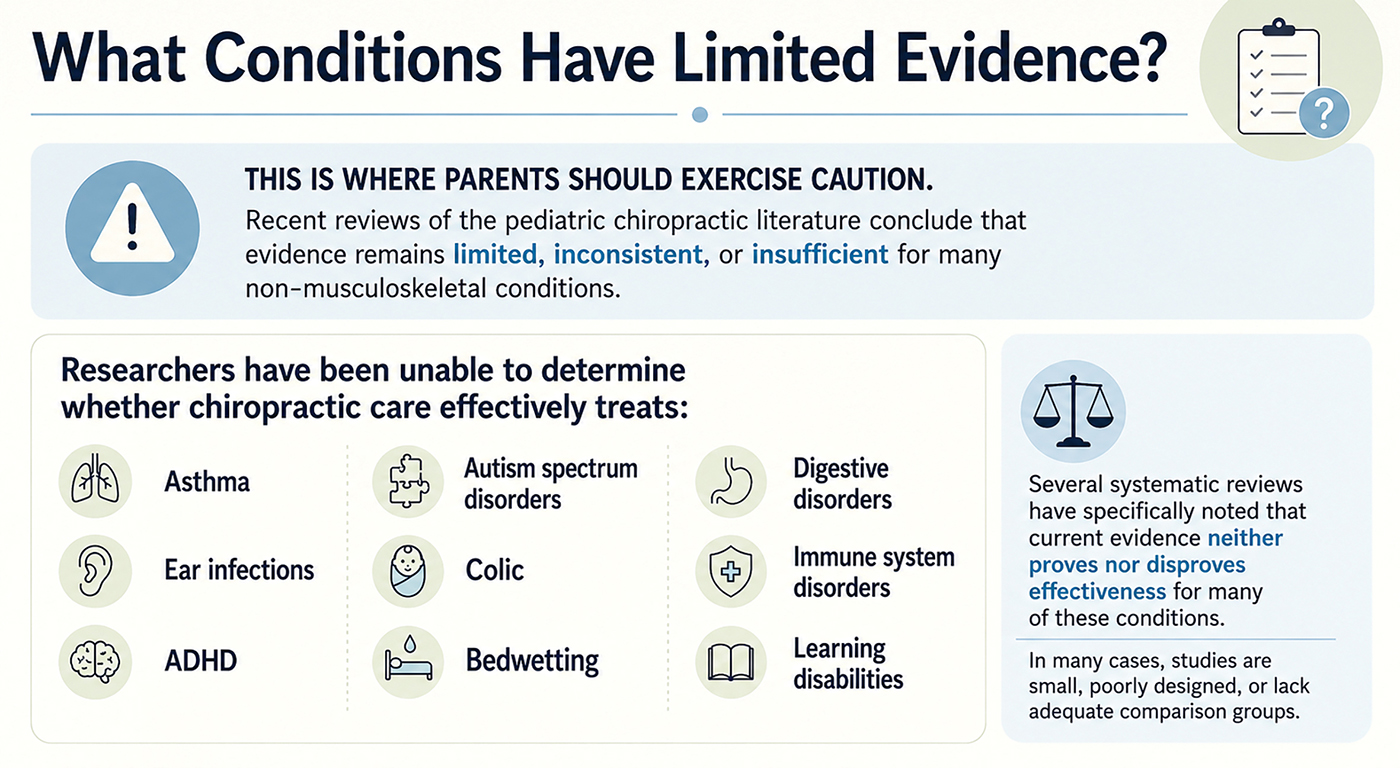
A 2024 review published in Clinical Pediatrics concluded that pediatric chiropractic care remains minimally researched and that evidence supporting many claimed benefits is limited. The authors noted that many systematic reviews have found low-quality evidence regarding effectiveness in children and adolescents.
Similarly, a large systematic scoping review published in BMC Pediatrics examined available evidence on spinal manipulation and mobilization in infants, children, and adolescents. Researchers found that while some studies reported benefits, the overall quality of evidence remained low and further research is needed.
What Does Treatment Look Like?
A first visit typically lasts 30 to 60 minutes and includes:
→ Health history
→ Physical examination
→ Movement assessment
→ Discussion of symptoms
→ Treatment planning
Follow-up visits generally last 10 to 20 minutes.
The number of visits depends entirely on the child’s condition.
For an acute sports injury or muscle strain, treatment may involve several visits over a few weeks. For chronic issues, visits may occur less frequently over a longer period.
There is no universally accepted schedule for pediatric chiropractic care. Recommendations vary among practitioners and should be individualized.
If a Child Starts Chiropractic Care Early, Must They Continue for Life?
No.
There is no scientific evidence suggesting that children who receive chiropractic adjustments must continue receiving them throughout adulthood.
Some families choose ongoing maintenance visits, while others seek care only when a specific issue arises. Long-term treatment should be a personal decision based on symptoms, goals, response to care, and discussions with healthcare professionals.
How Can Parents Find a Reputable Chiropractor?
When choosing a chiropractor for a child, experts recommend:
→ Verifying state licensure
→ Asking about pediatric-specific training
→ Discussing treatment goals clearly
→ Requesting evidence supporting proposed treatments
→ Ensuring the chiropractor works collaboratively with pediatricians and other healthcare providers
→ Avoiding practitioners who promise to cure serious medical conditions
Parents should be cautious of claims that chiropractic care can routinely cure diseases unrelated to the musculoskeletal system.
The Bottom Line
Chiropractic care may provide benefits for some children, particularly those experiencing musculoskeletal complaints such as neck pain, back pain, headaches, and sports-related injuries. However, the scientific evidence supporting pediatric chiropractic care remains limited for many other childhood conditions.
Most experts agree that chiropractic care should be viewed as one potential component of a child’s healthcare plan rather than a replacement for pediatric medical care. Parents considering treatment should discuss options with both their pediatrician and a licensed chiropractor, weigh the available evidence, and make decisions based on their child’s individual needs.
As research continues to evolve, the most responsible approach is one grounded in evidence, realistic expectations, and collaboration among healthcare professionals.