



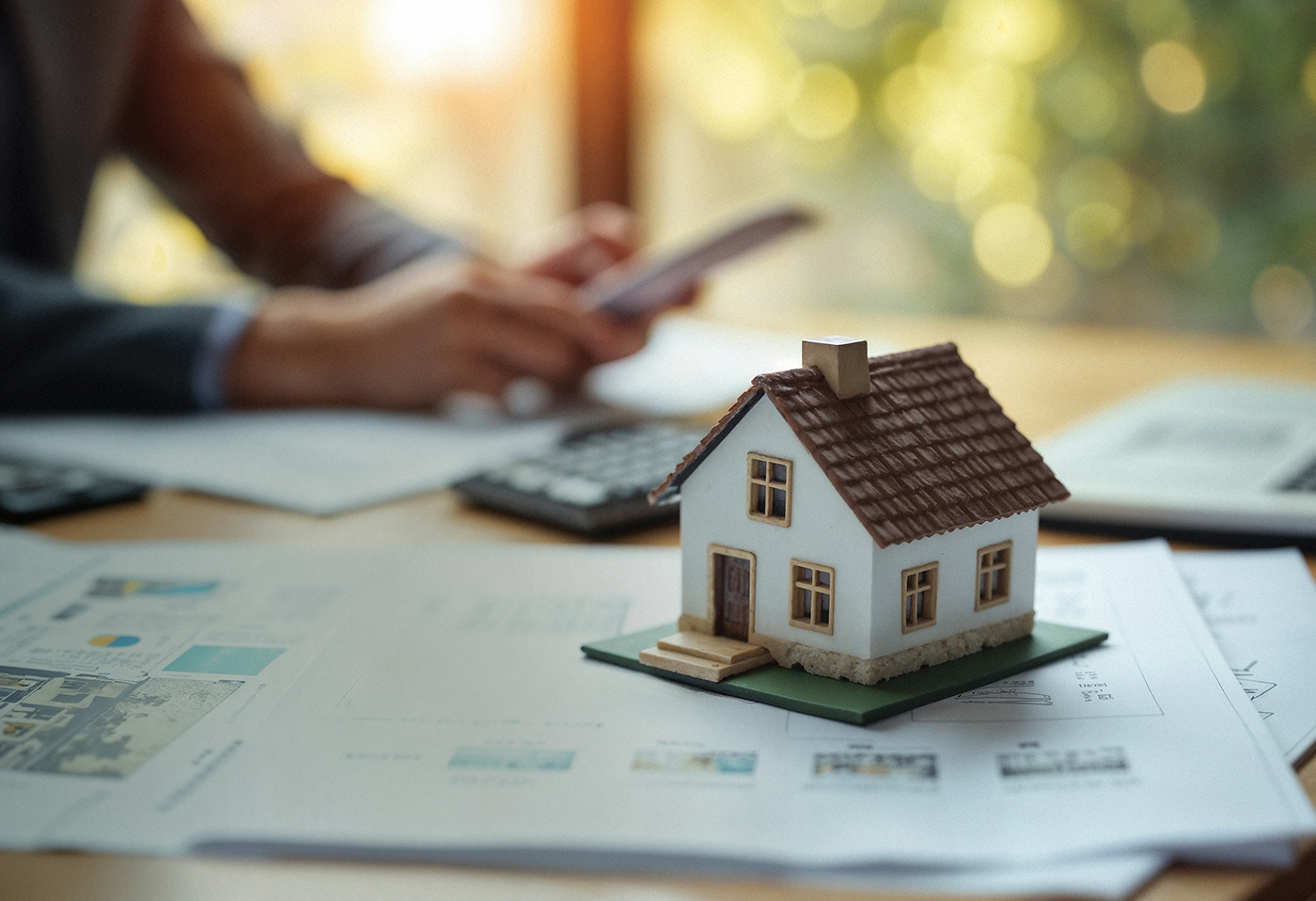
Politicians in Michigan and other states are proposing the repeal of property taxes. An additional proposal in Michigan would eliminate property tax “uncapping.” Property taxes are based on a home’s taxable value, whose annual increase is limited to 5% or the rate of inflation, whichever is lower. When a home is sold, its taxable value “uncaps” and immediately rises to its true market value. This means the new homeowner pays a higher property tax bill than the previous owner.
The idea behind repealing property taxes or eliminating uncapping is to make homeownership more affordable. However, this may not occur because of the concept of “house price capitalization.” This means the price of a house reflects all of the costs and benefits associated with owning it. If the benefits of a house increase or the costs associated with it decrease, those changes are reflected in a higher purchase price. This is why a house with a new roof or an updated kitchen sells for more than a comparable house whose roof will need to be replaced soon after purchase.
House price capitalization also applies to local public goods, such as roads, schools, parks, police and fire protection, and other community amenities. A house in a community with high-quality public services will sell for more than a comparable house in a community with lower-quality services. This is one significant reason why home prices in Detroit remain relatively low. Detroit has some of the highest property tax rates in the state but has struggled to provide high-quality local public goods. High property tax rates without corresponding public services are capitalized into lower home prices.

Demand remains strong while the supply of housing is constrained. Repealing property taxes does not address either of these factors.
Suppose property taxes are abolished and local communities find another way to fund their public services. The benefits of owning a home remain high, but the property tax bill falls. This increases demand for housing, meaning homes will sell for higher prices than before. The same is true if property taxes no longer uncap when a home is sold. The property tax savings enjoyed by the new owner are largely offset by the higher purchase price.
The effect of repealing property taxes or eliminating uncapping would be a transfer of wealth from local governments, where property taxes fund public services, to existing homeowners, who would likely be able to sell their homes for higher prices. The financial benefit to new homeowners, however, may be minimal.










This assumes local governments can replace the lost revenue with another funding source. If they cannot, the quality of local public goods will decline, putting downward pressure on home prices and reducing the value homeowners receive when they sell. While lower home prices may appear to improve affordability, homes in communities with weak public services are generally less desirable to buyers.
Housing affordability is fundamentally a supply-and-demand issue. Demand remains strong while the supply of housing is constrained. Repealing property taxes does not address either of these factors. Instead, it increases demand, making the policy ineffective as a means of improving housing affordability.

Dr. Christopher Douglas came to the University of Michigan-Flint in 2006. He earned a B.S. in Electrical Engineering and a B.S. in Economics from Michigan Technological University in 2001, and his Ph.D. in Economics from Michigan State University in 2007. As Professor of Economics, he teaches Principles of Microeconomics, Principles of Macroeconomics, International Economics, Public Finance and Sports Economics.