



PHOTOS COURTESY OF GENESEE COUNTY HISTORICAL SOCIETY
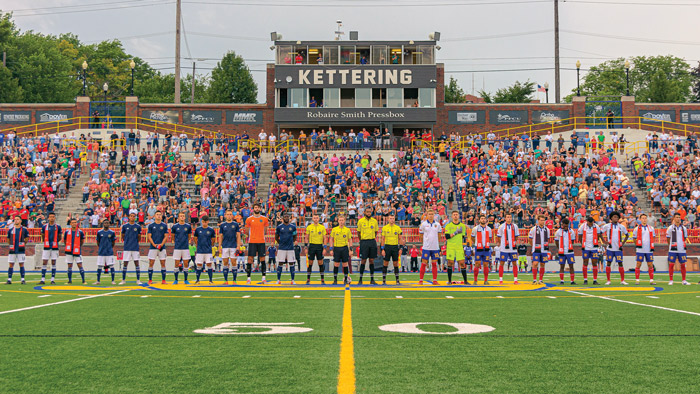 The rich history of Flint sports is well known across the country. From Ricky Leach, Glen Rice, and Jimmy Abbott to Mateen Cleaves, Grant Fisher, Geena Gall Levoe, Pam Stockon Brady, Deanna Nolan, Claressa Shields, and Mark Ingram Jr., it’s an unbelievably long and distinguished list — almost hard to believe for a city the size of Flint and Genesee County.
Recently, the U.S. Olympic hockey gold medal reminded Flint-area sports fans of our connection to the great “Miracle on Ice” team of 1980, led by Flintstone Ken Morrow, and reignited discussion about Flint sports history. Morrow, in fact, credits his Flint heritage with developing the innate toughness that led not only to his gold medal, but also to an astounding four straight Stanley Cups that followed.

Flint has dominated in everything from roller skating competition (in the late ’70s, Flint was the dominant national leader) to motorcycle racing, with a string of world champions like Bart Markel, Scotty Parker, and Jay Springsteen, and even race car champions going all the way back to Louis Chevrolet and “Wild Bob” Burman with the old Buick Racing Team, and more recently Erik Jones in NASCAR.
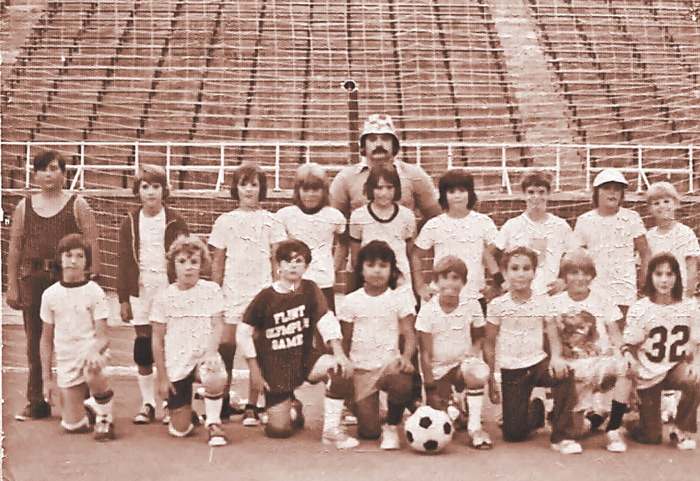
Vintage 1975 Washington Elementary School Team at Atwood Stadium
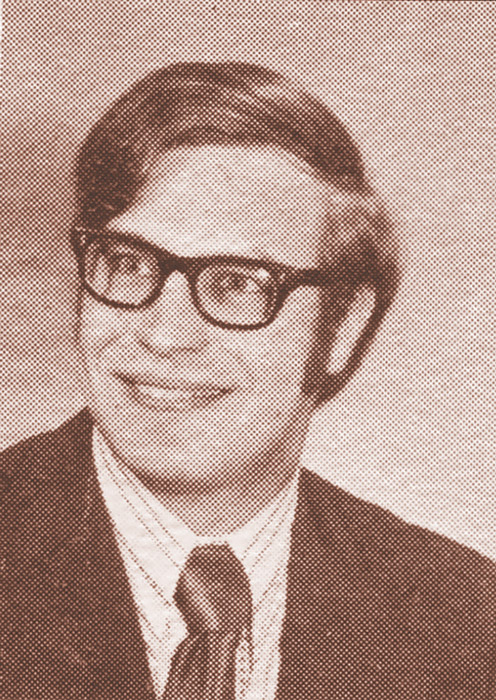
Dave Babiericki










Mengle brought a deep knowledge of the game rooted in European traditions and helped introduce more structured, technical approaches to soccer in the Flint area.
Despite this outsized history, there is one local sport that is often left out of the conversation. That’s kind of strange because it happens to be the most popular sport on the planet, and the Flint area has been very good at it for a long time: football—not the American kind, but the kind the rest of the world plays, the sport we call soccer.
The history of the game is long and proud in Flint, and it starts pretty much where all sports in Flint took off, with General Motors teams. When the factories began to grow, they needed workers, and they needed them fast. This included a significant influx from the South and from Europe. Into this melting pot, sports entered the scene as the ultimate team-building social lubricant.
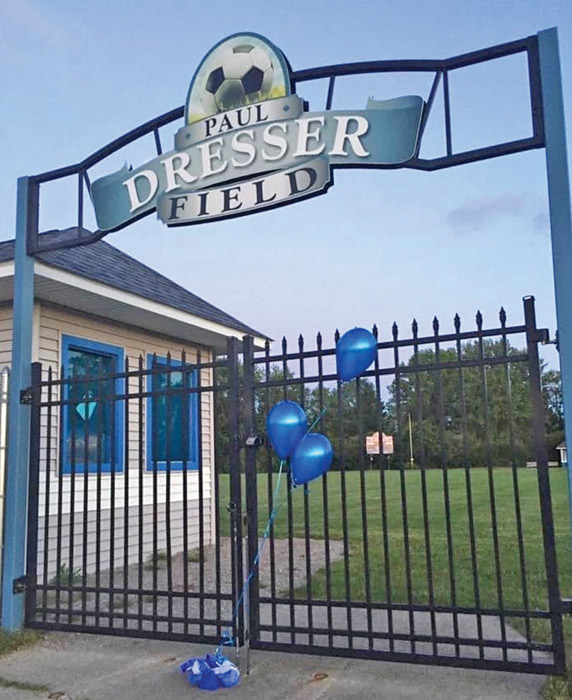
The field is named in Paul Dresser’s honor.
The infrastructure and culture they created paved the way for the growth of all sports at the factory level, including soccer. By the 1960s and beyond, Flint already had a well-established recreation system in place. This made it possible for soccer programs like the Olympian Games and CANUSA Games to thrive, offering structured competition and international exposure to young athletes. Soccer benefited from this environment, as it easily integrated into an existing network of leagues, facilities, and community support.
Into this foundation came several pioneers of Flint-area soccer. One of the first was Gerhard Mengle. He is one of the most important behind-the-scenes figures in the history of soccer in Flint and Genesee County.
While he isn’t widely known outside the region, his local impact is significant, especially in building the structure that allowed soccer to grow. Mengle was part of the wave of European influence on American soccer, which is key to understanding his role. The community also supported the sport significantly, especially the heavily European St. John’s neighborhood, situated in a pie shape between the sprawling Buick plant, the Flint River, and the East Side just across the river.
Mengle brought a deep knowledge of the game rooted in European traditions and helped introduce more structured, technical approaches to soccer in the Flint area. Much of the expertise came from immigrants and first-generation Americans. Mengle’s biggest contribution wasn’t as a player; it was as a builder and organizer. He was heavily involved in establishing local soccer clubs and leagues, promoting youth participation in summer soccer, and supporting the integration of soccer into existing recreation systems.
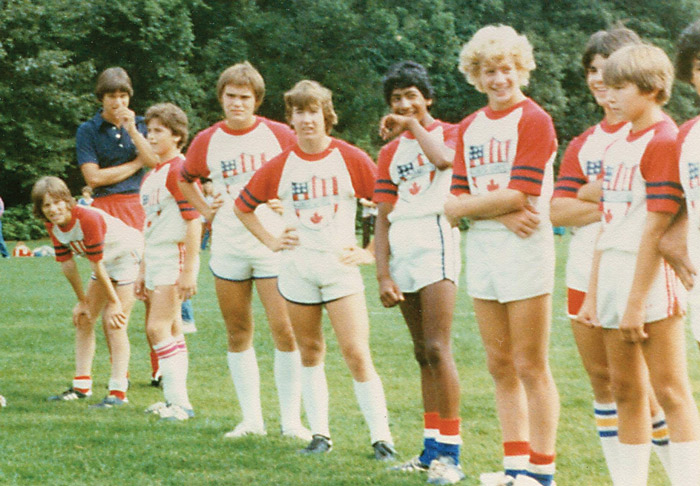
The 1979 Flint CANUSA soccer team in Canada
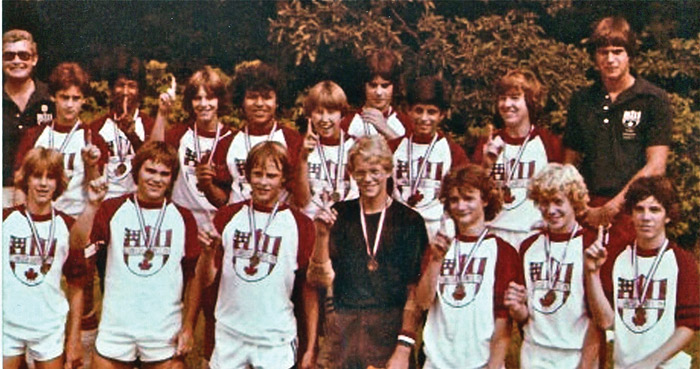
The 1979 Flint CANUSA soccer team celebrates a win over the CANADIANS. Coach Tom Saxton is in the back row, far right.
As the sport grew, it was powered by youth soccer, including summer teams that evolved into Olympian Games competitors and ultimately CANUSA all-star teams that competed against Canadian all-stars from Hamilton, Ontario. The international, Olympic-style competition pitting Flint against Canada included many sports, but it wasn’t until 1976 that Flint finally broke through with its first victory. And it wasn’t just a win, it was a dominant performance at Flint’s premier sports venue, Atwood Stadium. The Flint side did not allow a single shot on goal. Despite being a youth-level win, it was a major turning point, showing that Flint was catching up with the Canadians.
The leader of that team was a young soccer standout named
Tom Saxton, who would go on to have even more influence on the local game than anyone before him. A graduate of Flint Northern, Saxton had been traveling throughout the Flint Community Schools system teaching soccer skills at elementary schools. He was tasked with coaching that CANUSA team and many more to follow. Saxton would later lead the Michigan State University women’s team for more than 30 years.
Youth soccer became a vibrant part of the city’s sports scene, largely led by Community School Directors (CSDs) like Dave Babieracki at Washington Elementary and Eisenhower schools. He also created the area’s first soccer-specific athletic supply store, Kick It Around Sporting Goods. Travel soccer marked the next stage of growth, led by the Concordia ’76 teams and Flint Sports Soccer Club. These squads brought together the best players in the county and competed against top teams from the Detroit area.
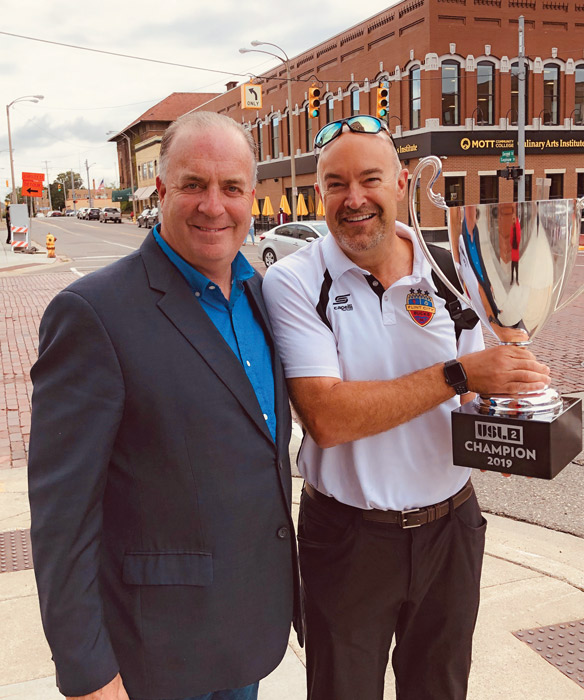
Costa Papista, who is one of the owners of the Flint City Bucks
and Senator Dan Kildee
In 1980, the Flint Sports Soccer Club, led by coach Stan James, finished second in a tough metro Detroit league, losing 2–1 to a strong squad made up entirely of foreign-born players, predominantly from Ukraine. That result signaled a significant rise in talent level. That same year saw the first city school soccer teams, with Whittier Junior High, coached by Mike Wilson, finishing unbeaten and unscored upon.
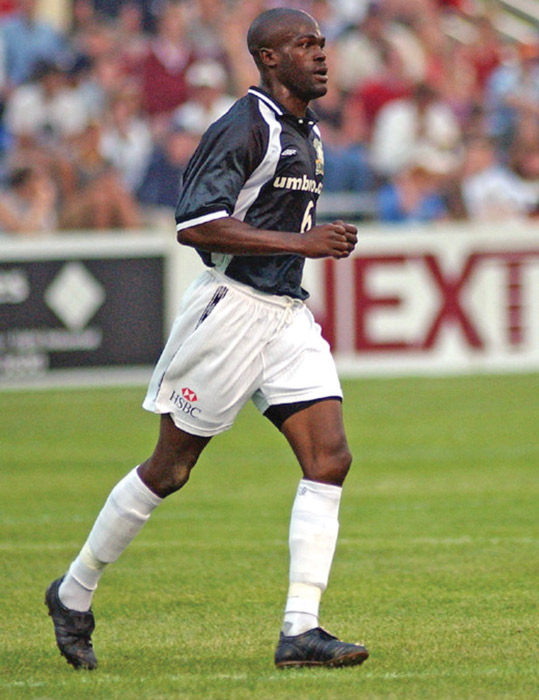
Mali Walton

Up to that point, many of the best soccer players in Genesee County came from the inner city of Flint. However, Flint did not have varsity soccer at the high school level. That changed in the 1980s when suburban schools like Carman and Grand Blanc established strong programs. That effort was led by coaches including Rick Trainor, Doug Burroughs, Ken Cole, Jim Whitinger, and most notably Paul Dresser.
According to Andy Zinn, who grew up in the Flint soccer system and played at Carman under Dresser, “Paul Dresser was the driving force in bringing soccer to the Carman community. He developed the youth program for all ages and formed both the boys’ and girls’ teams. He was incredibly influential.” Zinn later captained the Central Michigan University soccer team.
Dresser’s influence was so impactful that Carman captured the 1980 Michigan state soccer championship. His program also produced professional players Greg Robertson, Jeff Dresser, and Rob Collins.
The quality of players from the area increased significantly in the 1980s. The 1981 Flint CANUSA 16-and-under team featured eight players who earned college scholarships and four who captained their teams. That squad was so strong that even backup goalkeeper Xan Garlick went on to become a starter at Dartmouth.
Top players included Tom Doherty, who won a national championship at Indiana, and Kris Sirchio, who won a national title at Duke. The growing talent pool also produced Mali Walton of Flint Northern, the only area soccer player enshrined in the Greater Flint Area Sports Hall of Fame. Other standout teams included the Lady Strikers, a premier women’s team at both the local and travel levels for nearly a decade.
Walton later played for the Flint City Bucks, where his legacy is still celebrated, and he now serves as a coach. The Bucks represent the professional culmination of Flint’s soccer history. Founded in 1995 as the Mid-Michigan Bucks, the team eventually moved to Flint. The rebrand to “Flint City” included a new logo featuring an arrowhead, honoring the city’s automotive heritage.

Tom Saxton

Paul Dresser
The franchise has won four national championships, 17 division titles, and 11 conference championships. In 2019, they delivered a defining Flint soccer moment with a national championship in front of nearly 8,000 fans at Atwood Stadium. Since then, Flint City AFC has been established as a women’s pre-professional team, also playing at Atwood.
Flint and Genesee County soccer might not be the first sport that comes to mind when people think of the area’s athletic legacy, but it is certainly worthy of being included in the conversation when discussing the very best.

Gary L. “Fish” Fisher is President of the Genesee County Historical Society. Born and raised in Flint, he has lived in the area most of his life and his family has been a part of the Flint area for over 115 years. His fascination with the history of the city has existed as long as he can remember. In addition to writing, he is the President of G.L. Fisher Capital Management, LLC , an investment and financial planning firm he founded in 1992. He asserts that Flint has produced the best cars, athletes and coney islands the world has ever known – and the toughest people! Fisher can be reached at
ply2win2006@aol.com