




When we hear the word longevity, it can sound complicated. Special supplements, expensive treatments or a strict lifestyle that most of us simply don’t have time for.
But longevity can be much simpler: How can we help our bodies stay healthy, strong and functional for as many years as possible? Living longer is wonderful, but we also want those extra years to be good years, with the energy to enjoy our families, travel, work, move comfortably and continue doing the things we love.
Two of the most important things we can do are surprisingly basic: eat nourishing foods and keep our bodies moving.

Eat More Foods That Help Your Body Thrive
There isn’t one magical “longevity food.” What matters is the pattern of what we eat over time.
Focus on adding more whole, nourishing foods rather than constantly thinking about what to eliminate. Start with colorful fruits and vegetables. Berries, leafy greens, tomatoes, carrots, peppers, citrus fruits, sweet potatoes, broccoli and other produce provide vitamins, minerals, fiber and protective plant compounds that support our health as we age.










You don’t need every superfood trending online. Choose fruits and vegetables that are available, affordable and that you enjoy eating.
Our goal shouldn’t simply be to add more years to our lives. We want to add more health, strength, independence and enjoyment to those years.
Don’t Forget Fiber and Protein
Fiber and protein both deserve a place in the longevity conversation. Beans, lentils, peas, oats, whole grains, fruits, vegetables, nuts and seeds are good sources of fiber, supporting digestive health and helping maintain healthy cholesterol and blood sugar levels.
Ask yourself, “What plant can I add to this meal?” It might be fruit with breakfast, beans with lunch or vegetables with dinner.
Maintaining muscle is also important as we age. Fish, chicken, eggs, beans, lentils and Greek yogurt can all be part of a balanced diet. Try including protein throughout the day instead of saving most of it for dinner.
Choose Healthy Fats and Drink Your Water
Fat isn’t something we need to fear. Avocado, nuts, seeds, olive oil and fatty fish provide beneficial fats that support heart and overall health.
Hydration is another simple thing we sometimes overlook. Keep water nearby and drink it with meals. If plain water isn’t appealing, add lemon, lime, cucumber or fresh fruit.
Now Let’s Talk About Movement
Physical activity is another major part of healthy aging. That doesn’t mean everyone needs to become a runner or spend hours in the gym.
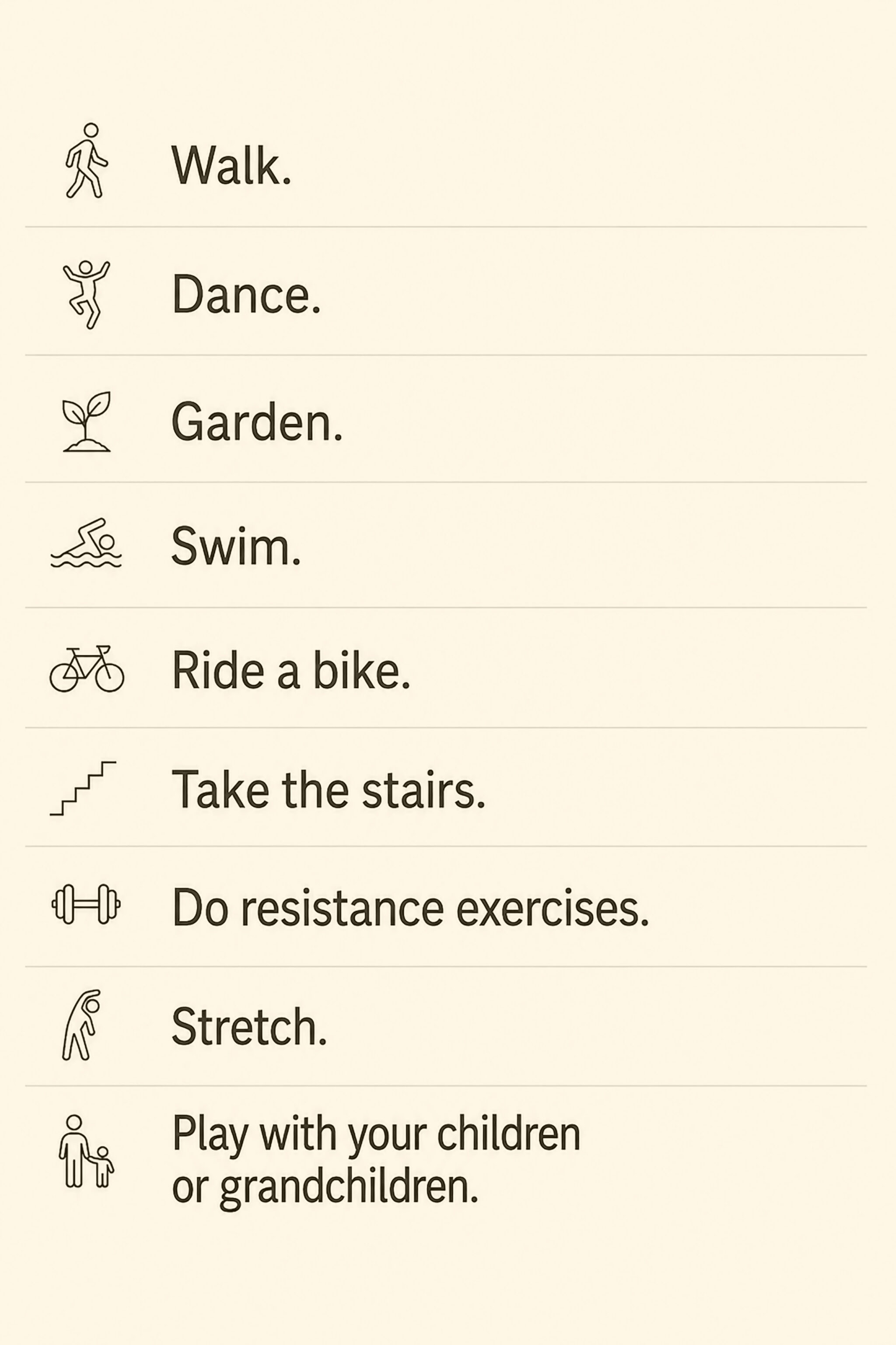
Find ways to move that you enjoy, because those are the things you’re more likely to continue doing.
Walking is one of the simplest places to start. A walk after dinner, a few short walks during the day or meeting a friend for a walk can make movement a natural part of your routine.
Strength Matters
As we get older, preserving muscle becomes increasingly important. That’s why we shouldn’t think only about cardio. Strength training matters, too. You don’t need a room full of gym equipment. Bodyweight exercises, resistance bands and light weights can help maintain strength.
Being able to get out of a chair, carry groceries, climb stairs, maintain your balance and continue everyday activities independently, that’s what strength is really about.
You Don’t Have to Get It Right All the Time
This may be the most important part. You do not need the “perfect” diet. You don’t have to exercise seven days a week. And you certainly don’t have to buy every product marketed as anti-aging.
Longevity is built through the ordinary things we do again and again:
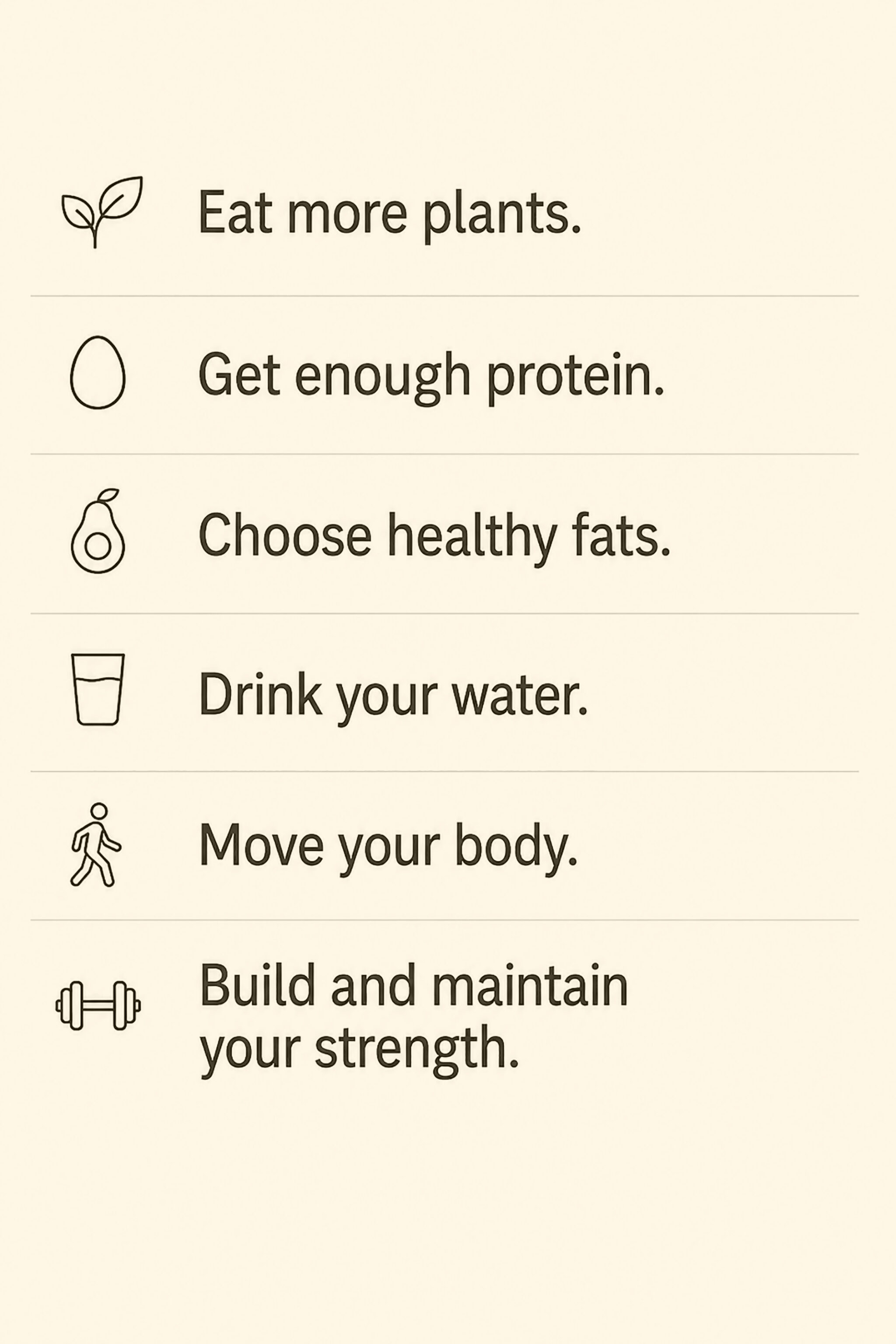
Our goal shouldn’t simply be to add more years to our lives. We want to add more health, strength, independence and enjoyment to those years.
No matter where you are today, you can start supporting your future self with your very next meal and your very next step.

Dr. Shan Jackson, Owner and CEO of Healthy Just Feels Right is a certified holistic mental health and wellness specialist, book author and motivational speaker. She has a passion for nutrition and loves to cook, develop recipes and write about health and wellness. Dr. Jackson aims to help individuals and families transition to a healthier lifestyle by incorporating more fresh foods into their diets. She believes that food can play an important role in managing chronic health issues, symptoms of depression and other mood disorders without using medications that can have harmful side effects. To discover more creative and fun ways to inspire a healthier lifestyle, visit healthyjustfeelsright.com.