










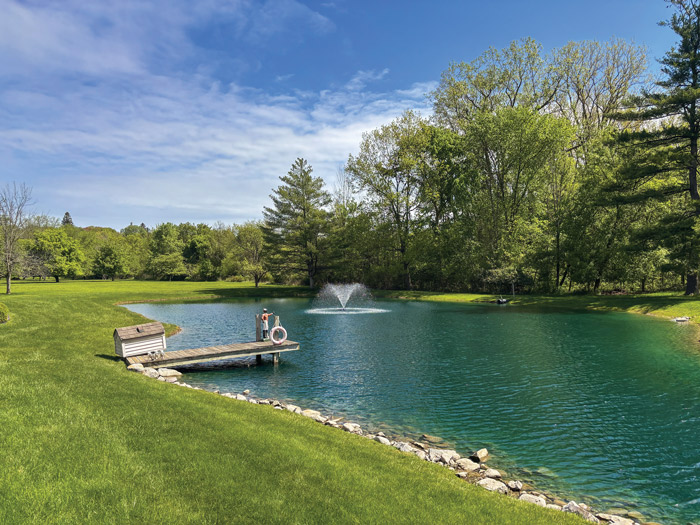
In the quiet communities and lakefront neighborhoods of southeast Michigan, the health of a pond or small lake often defines the quality of life around it. From backyard fishing spots to HOA-managed waterways, maintaining these ecosystems requires both technical expertise and a personal touch, something Zach Goodheart has built his company around.
As founder and president of Michigan Lake & Pond, Goodheart brings two decades of industry experience to a business rooted in both science and relationships. He entered the aquatic management field in 2005, later serving as a general manager for a Michigan-based application company and as national sales manager for one of the country’s largest aquatic herbicide distributors. Those roles exposed him to best practices nationwide and helped shape the company he leads today, one grounded in strong customer service, effective management strategies, and a deep professional network.

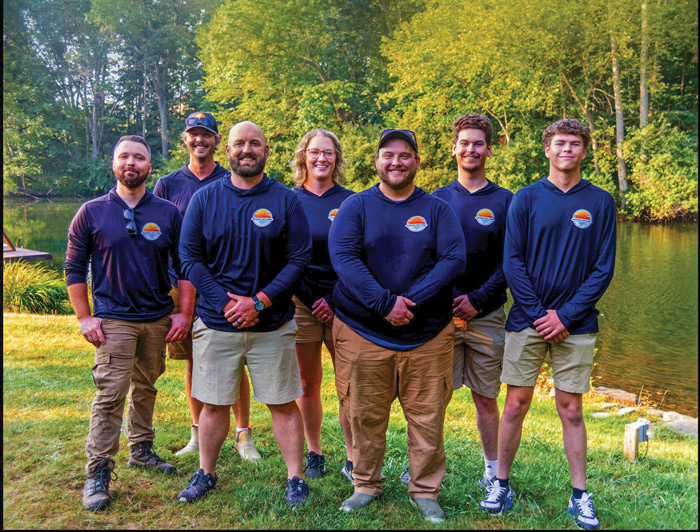
Michigan Lake & Pond team photo
Based in Fenton, the family owned company services southeast Michigan along with the Bay and Thumb regions. While larger public lakes often operate under exclusive treatment permits, Michigan Lake & Pond has carved out a niche working closely with private pond owners and homeowner associations. Roughly 70% of its work focuses on ponds, with the remainder dedicated to smaller lakes.
That focus has influenced more than just logistics, it has defined the company’s approach. Working with individual homeowners or small groups allows the team to build direct relationships, offering tailored solutions and ongoing education about waterbody health. “Communication is one of our core strengths,” Goodheart emphasizes, and it shows in how the company collaborates with clients on long-term management plans.
Michigan Lake & Pond specializes in private pond owners and homeowner associations. Ponds make up 70% of its business, with the rest focused on smaller lakes.
Most calls the company receives stem from a common frustration: nuisance plant growth. Thick mats of algae, invasive weeds, and murky water can quickly diminish both the beauty and usability of a pond. Homeowners typically want cleaner water for aesthetic reasons, safer swimming conditions, and better recreational opportunities. To meet those needs, Michigan Lake & Pond often implements monthly service programs running from April through September, while lake management tends to follow a more flexible, survey-based approach.
Beyond plant control, water movement plays a crucial role in maintaining a healthy aquatic environment. Decorative fountains, a popular choice among property owners, provide visual appeal while adding oxygen to the water. However, for those prioritizing ecological health, bottom aeration systems, commonly called bubblers, are often the better option. These systems circulate oxygen throughout the entire water column, supporting fish populations and reducing the likelihood of issues like winter fish kills. They can even be positioned to keep areas ice-free during colder months.
For more localized concerns, such as clearing debris near docks or swimming areas, dock-mounted water movers offer a practical solution. By pushing weeds and sediment into deeper water, they give homeowners greater control over specific sections of shoreline.
Before installing any of these systems, access to a reliable power source is a key consideration, along with deciding whether visual impact or long-term efficiency is the priority. Fountains, while attractive, require seasonal maintenance and winterization, whereas aeration systems tend to be lower-maintenance and can operate year-round.
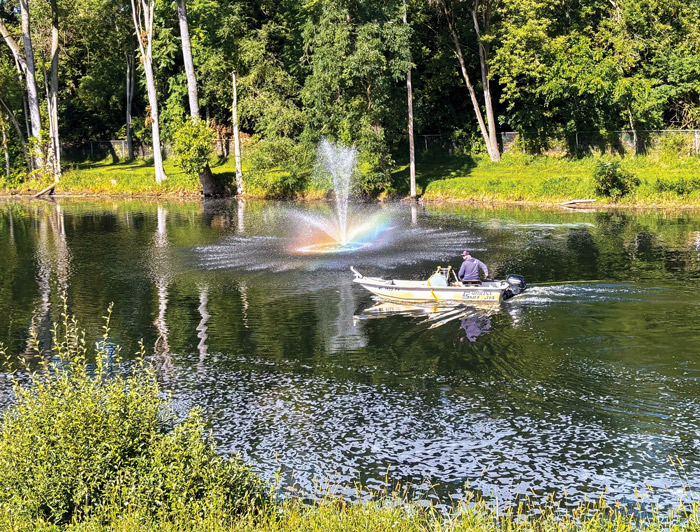
Treatment fountain
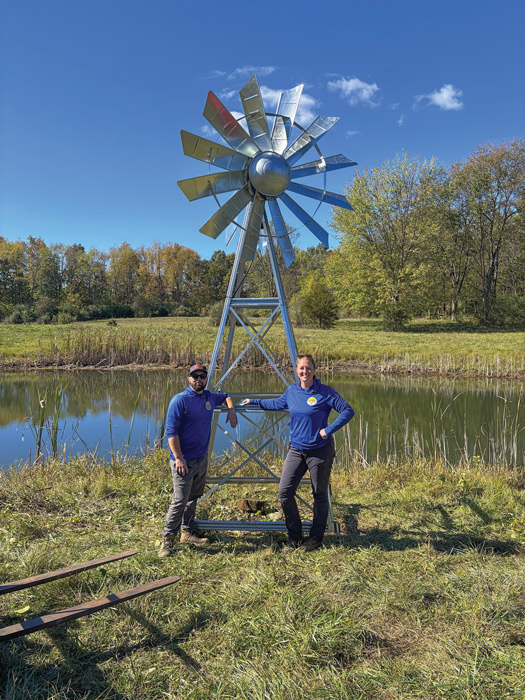
Windmill install
At the heart of Michigan Lake & Pond’s philosophy is a proactive, environmentally conscious approach. By focusing on nutrient control, using natural bacteria and phosphate binders, the company aims to reduce the conditions that fuel excessive plant growth, minimizing reliance on herbicides and targeting only problematic species.
For Michigan property owners, that approach offers more than just cleaner water, it provides a sustainable path toward healthier, more enjoyable outdoor spaces.