










BROWSING:  History

Perspective in America began to shift in the ‘90s. While the ‘80s represented the self and the actualization of domestic concern, leadership in the ‘90s began to look outside the border and beyond. In 1990, NASA released the Hubble Telescope into orbit to gain an unobstructed view of the universe and its deployment has been integral to our understanding of the universe. On our planet, 1990 began a turbulent time when Iraq, under the leadership of Saddam Hussein, invaded the neighboring country of Kuwait. This led to Operation Desert Storm the next year, which ended quickly after only 100 hours of ground fighting; but it began a period of major U.S. involvement in the Middle East that would stretch far into the future. Immediately following Desert Storm, President George H. W. Bush found himself in a two-front political war at home. The 1992 Presidential election pitted incumbent Bush against Democrat Bill Clinton and upstart, Ross Perot. Clinton emerged victorious. The next year brought tragedy with the bombing of the World Trade Center in New York which killed six, and then the WACO disaster that took 76 more lives. The first half of the decade ended in more foreign policy with the creation of the North Atlantic Free Trade Agreement (NAFTA).

Economic confidence was high at the beginning of the 1980s. Wall Street and the banking industry were set to explode and when Reagan trounced Carter in the general election, the days of big business began. The excess of the 1980s was not simply limited to capitalism. The “Miracle on Ice” occurred at the 1980 Olympic Games in Lake Placid, NY, propelling Americans into a red, white and blue frenzy. Patriotism was at an all-time high, and Reagan rode it all the way to another landslide victory against Mondale in 1984. Even the Iran-Contra affair in 1986 did nothing to erode support for the President. George Bush continued where Reagan left off after winning the general election in 1988, defeating Michael Dukakis.

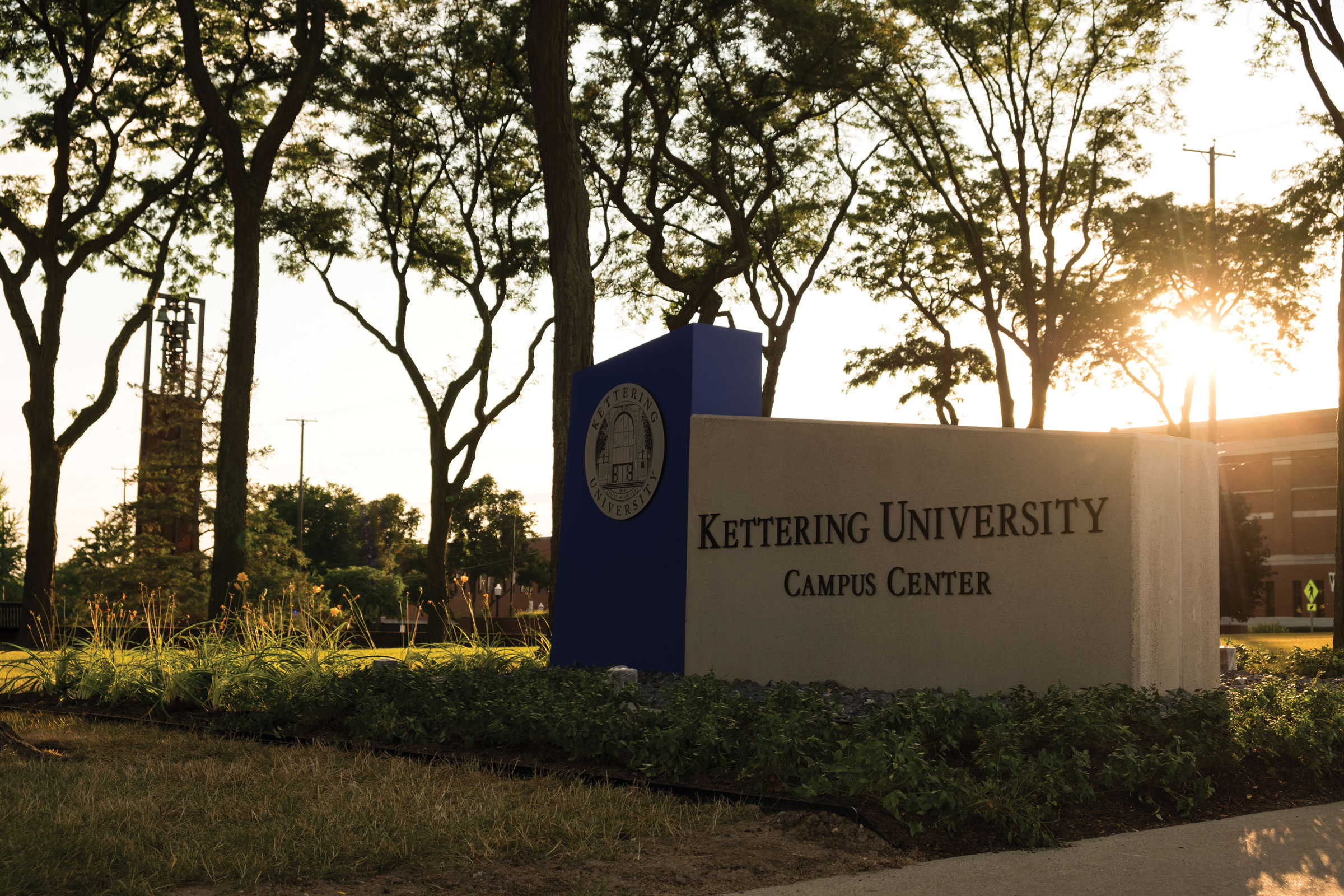
At 7pm on October 20, 1919, Major Albert Sobey unlocked the door to his classroom for the first time. His students were workers from all walks of life who made the journey to Flint with the hope of a better life through the auto industry and General Motors. All of them decided to attend a new school in Flint dedicated to the art of engineering and management. What that one, small turn of a key would lead to was a wonderful surprise for the city and to students for a century. That first class was the birth of Kettering University.


The 60s and 70s were a tide of change for our nation. The chaos of the 60s reached a crescendo in 1970 when the Ohio National Guard opened fire at students of Kent State University as they protested the Vietnam war, killing four. At this point, support for the war began to rapidly erode. Public sentiment began to turn against the government and President Nixon. If anyone remained on the fence after the shooting, the release of the Pentagon Papers in 1971 made the decision easy. Despite this, in 1972 Richard Nixon trounced George McGovern in a landslide victory to retain the Presidency. His victory would not last long, as reporters Bob Woodward and Carl Bernstein of The Washington Post were already beginning to uncover the Watergate Scandal. In 1973, Vice President, Spiro Agnew resigned facing charges of tax evasion and the Supreme Court came to a landmark decision in Roe vs. Wade that would resonate into present day. A year later, Nixon resigned in the face of Watergate. A year later in 1975, the United States pulled out of the Vietnam War.

The tumultuous sixties began innocently. John F. Kennedy won the 1960 presidential election over Richard M. Nixon by the slimmest of margins causing a majority of Americans to envision a clearly promising and progressive future; but by 1962, that vision grew a little hazy during the bleak, fear-ridden days of the Cuban Missile Crisis.

Between the years 1638 and 1640, a fierce battle ensued in and around Genesee County. From the north, the Native American Chippewa Tribe (with the help of the Ottawa Tribe) attacked the Sauk Tribe. Merciless and well-orchestrated, the attack left no Sauk dwelling unturned. The bloody battle resulted in the complete expulsion of the Sauk tribe from the area and the entire State of Michigan. The Sauk were forced to migrate west, finally taking up a permanent position on the banks of Lake Michigan, in the current-day State of Wisconsin. Many Genesee County residents have heard the story of the Battle of the Flint River. Is there truth to it … or is it simply a legend?