







Photos courtesy of Genesee County Historical Society
The 2025 World Series between the Toronto Blue Jays and the Los Angeles Dodgers was one of the best of all time — and it has the TV ratings to prove it. The 11-inning finale, won by the Dodgers, drew 51 million viewers across the United States, Japan and Canada specifically. That made it the largest audience for a World Series game in 34 years.
Baseball has been recognized as America’s pastime for more than 160 years, with the term emerging in the mid-1850s and cementing its status by the 1860s. Emerging from local games in the early 1800s, the sport’s popularity exploded during the Civil War, solidifying its place as a national unifier.

That status has long been true in Flint and Genesee County, where the game has taken center stage as a community touchstone. Not surprisingly, it has produced some outstanding players, teams and moments.
Founder of General Motors, Chevrolet, Champion Ignition (later A.C. Spark Plug), Frigidaire, and savior and reinventor of Buick, William C. “Billy” Durant was both a player and team manager as a boy in Flint in the 1870s. He was likely a terrific manager — his team-building skills as an adult were integral to his legendary business success.
By the turn of the century, factory teams were taking center stage. Nearly every local factory fielded a team, and it wasn’t unusual for them to hire employees primarily because they could serve as “ringers” on the baseball team. Not only were the factory teams top-notch, but city recreational league teams were among the best amateur clubs in the country. High school baseball was also extremely popular.










The best team in the state, Flint High School (aka Flint Central), was an early dynasty, winning state championships in 1900, 1903 and 1904. Other area schools claiming state titles over the next 120 years include Flint Northern, Flint Southwestern, Flint Powers Catholic, Grand Blanc and Burton Bentley.
Of course, it’s the players who made the teams great, and the Flint area has produced an abundance — including several who reached the mountaintop of Major League Baseball, “The Show,” as it’s known to aspiring players.
Here’s a star’s guide to the galaxy of Flint’s finest diamond masters of the past 100 years:
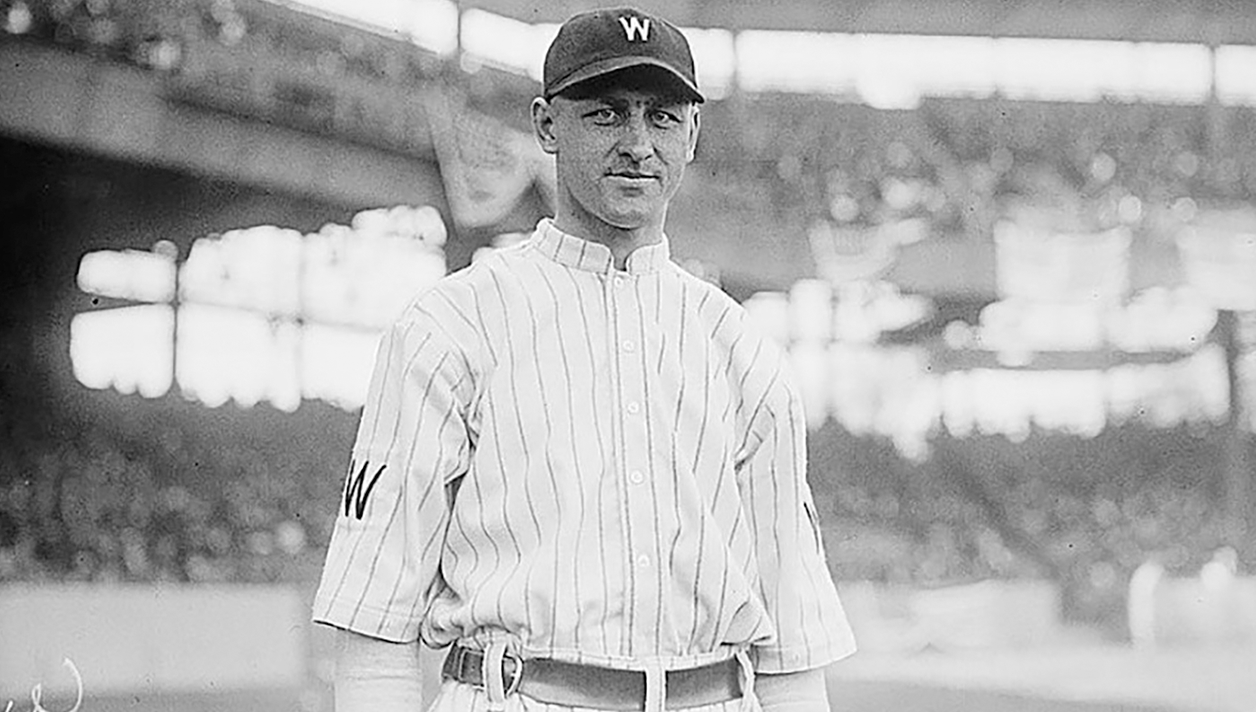
Mike Menosky
“Flint’s First Big Leaguer”
The first Major Leaguer from Flint, Mike Menosky starred in the city’s amateur leagues before replacing Babe Ruth in the outfield for the Boston Red Sox after Ruth was traded to the New York Yankees.
In the early 1920s, Menosky led the Red Sox in stolen bases, games played, walks and triples. He batted .300 in 1921.
Sophie Kurys
“The Flint Flash”
A small article by the Chicago Associated Press found its way onto the sports page of the Flint Journal on Tuesday, March 2, 1943, announcing upcoming tryouts in cities throughout the United States and Canada for a new girls Pro Softball League to “operate this summer,’ financed by Chicago Cubs owner and chewing gum magnate, Phillip K. Wrigley.
The tiny paragraph went unnoticed by 17-year-old Sophie Kurys, who was busy with work, high school, and player-manager of her basketball team, Chevrolet CIO, which competed at Berston Field house’s auditorium, where the girls’ games were held.
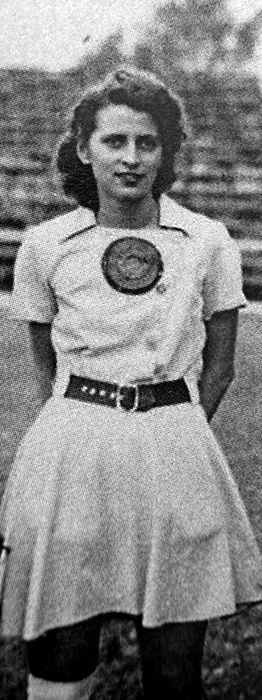
Sophie Kurys had been a sports star from her earliest days at All Saints Elementary school, Lowell Junior High School on the East Side, and as a Flint Northern Viking.
A month later, another article announcing the date and place of the tryouts went unnoticed, as well. Finally, the day arrived, but it wasn’t until some of her pals tracked her down, asking, “Hey Sophie! Aren’t you going to tryouts tonight?”
That April day was a typical sixth month of winter day in Flint, freezing with snow flurries and way too early for outdoor ball. Since she’d heard nothing about any sort of tryout, she was a bit confused by the prospect. “There’s a scout here from Chicago,” the girls informed her, and it would be in the gym at Berston Field House on Flint’s north side. Sophie had her friends pick her up to take her to Berston, still wearing her skirt and sweater. The scout, Johnny Gottselig, a former Chicago Blackhawks hockey player, had played a smidge of semi-pro ball in Canada, but today he was watching about a dozen young women field grounders on the yellowing, varnished Berston gym floor.
Sophie made the cut and was invited by Gottselig to a final tryout at Wrigley Field in Chicago in May. Sophie’s journey to Wrigley Field had been paved by growing up in the shadow of the massive Buick plant at 4506 Grant Street in an immigrant neighborhood (the same one Polish Menosky lived in), in a strong Ukrainian/Polish blended home. She had been a sports star from her earliest days at All Saints Elementary school, Lowell Junior High School on the East Side, and as a Flint Northern Viking.
Sophie was an obvious and perfect fit for the new All American Girls Softball League— strong, competitive, fast, and sturdy. Exactly what the new league was looking for. The league was conceived as a sort of fill-in for the Major Leagues which had been decimated by its stars serving in the military during World War II. The brainchild of Wrigley, and the exodus of stars like Joe Dimaggio and Ted Williams was leaving lots of unsold tickets and open seats at Major League parks. Not only could the all-girls league fill seats, but it would also be a genuine morale booster for war workers in mid-sized industrial cities filled with wartime workers.
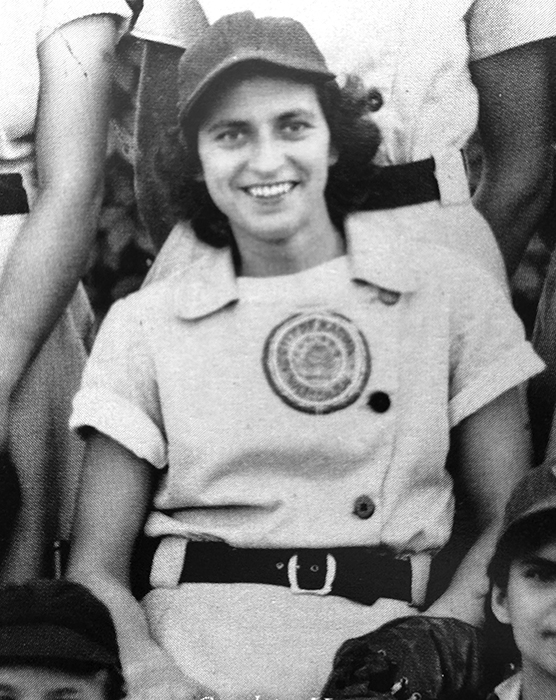
Sophie Kurys
Sophie not only made the team, but she also became a legend. Signing with the Racine Belles, she started her professional athletic career just a few days removed from her 18th birthday. Her career would be highlighted by her speed and base stealing prowess, and in her third year in the league in 1946 she was voted the Most Valuable Player by the managers of the league, all Major League Baseball managers themselves. Sophie hit .286, led the league in runs with 117, and had a .434 on base percentage.
But it was her remarkable 201 stolen bases in 203 attempts in a single season that became legendary. It is still a professional record today, even higher than Rickey Henderson’s 130 in the 1982 Major League Baseball season, and in fewer games played – and in a skirt! The “Flint Flash” moniker stuck, and Sophie was recognized as one of the greatest female ball players of all time.
In 1992, Hollywood film director (and Laverne from Laverne and Shirley fame) Penny Marshall consulted with Sophie for her new movie featuring Madonna and Tom Hanks called “A League of Their Own.” The movie was a big hit and shone a light on a forgotten part of baseball history.
After the film’s release, Sophie’s large family smiled proudly from the stands at Tiger Stadium in Detroit as Sophie and her Racine teammates were honored on the field during a game. The Flint Flash, like far too many of Flint’s heroes, has been largely forgotten in Flint. At Sophie’s Flint home field of Berston Field House there isn’t so much as a plaque honoring her epic achievements. But she is recognized along with her teammates in Cooperstown at the National Baseball Hall of Fame.
Dave Hoskins
“Wahoo” Hoskins
Dave Hoskins came out of Mississippi to Flint and dominated the Flint Recreational Baseball League. He starred for the Homestead Grays in the Negro Leagues in 1944 alongside future Hall of Famers Buck Leonard, Josh Gibson and James “Cool Papa” Bell.
A strong hitter and pitcher, Hoskins joined the Cleveland Indians in 1954 and helped lead them to the World Series (a loss to the New York Giants).
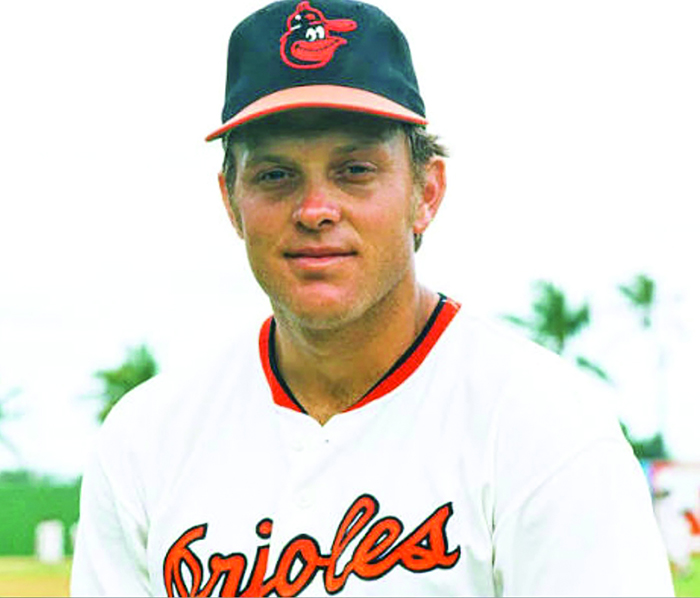
Merv Rettenmund
“Two-Sport Pro Draftee”
A standout at Flint Central and Flint Southwestern, Merv Rettenmund was drafted by both Major League Baseball and the NFL. He chose baseball and ultimately participated in seven World Series as a player and coach, winning with the Baltimore Orioles in 1970 and the Cincinnati Reds in 1975.
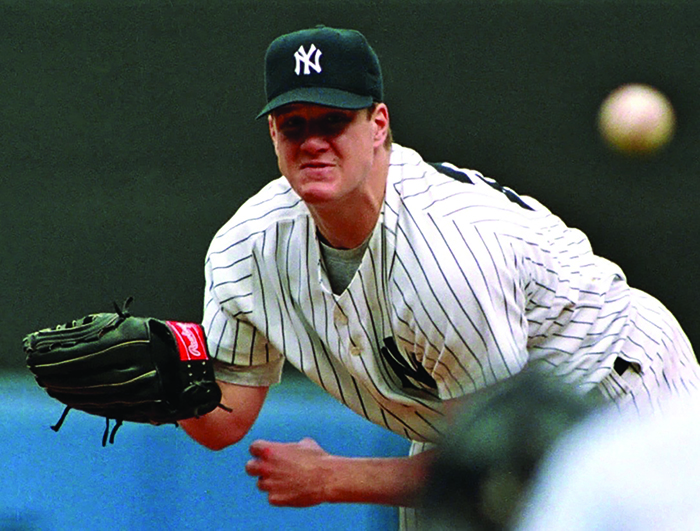
Jimmy Abbott
“The No-Hitter”
There isn’t any Flint athlete in any sport better known than Jimmy Abbott, a genuine celebrity whose accomplishments would be epic if he hadn’t achieved them with only one hand (born without a right-hand, Jimmy had to teach himself an entirely unique way of playing baseball and other sports).
Jimmy starred at Whittier Junior High, Flint Central, and the University of Michigan before skipping the Minor Leagues and leaping directly to the California Angels where he flirted with a Cy Young Award. Prior to that, he won a Gold Medal in the Pan Am Games, and the Olympics. He was awarded the Golden Spikes Award at Michigan (college baseball’s version of football’s Heisman Trophy), and the Sullivan Award as the nation’s top amateur athlete.
While playing as a New York Yankee, he tossed a no hitter writing his name into Yankee lore alongside Mickey Mantle, Babe Ruth, Joe Dimaggio, and Derek Jeter. There have been two best-selling books about him, one an autobiography, and two documentary films – so far.
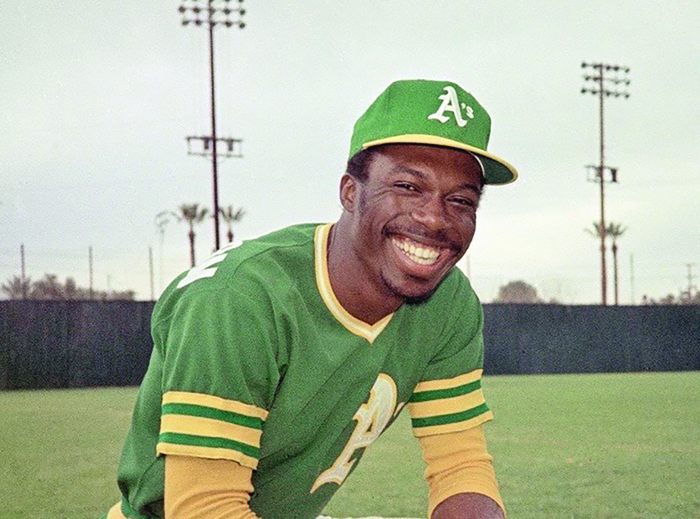
Herb Washington
“Fastest Man on the Planet”
Flint Central Indian Herb Washington was a track and field star, played football and basketball, and at one time named “The Fastest Man In the World,” but ironically found national fame as a Major League Baseball player. He became the only Designated Pinch Runner in Major League history when he joined the Oakland A’s in 1974. The team went on to win their third straight title against the Dodgers and Washington, with his electrifying baserunning and cool demeanor, solidified his status as the ‘swingiest’ of the “Swinging A’s” ‘70s baseball dynasty.
Flint and Genesee County have produced many more Major Leaguers, including Rick Leach, Ron Pruitt, Vic Bradford, Johnny Bero, Scott Aldred, Jeff Hamilton, Steve Boros, Mickey Weston, Bob Powell, Bobby Reed and Joe Mays.
Numerous others reached the Minor Leagues — no small achievement. Notables include Jeff Natchez, Larry Lamphere, Joe Boulton Sr., Jim Blight, Bob Grandas, Jamie Cochrane and Don Morrow.