When the word “couple” comes up in a romantic context, people often think of two people united in love. After all, “couple” is one word, not two. And it’s true: couples are a unified force that will weather life’s joys and challenges together. The traditional wedding format emphasizes this idea, from its matching wedding bands to white dresses and black tuxedos. The wedding uniform, if you will. However, as they plan their weddings, more and more engaged people are paying attention to the other part of the definition: two people. Those two people are united by love and will walk through life together, yes, but both partners also have their individuality— something they bring to the relationship that enriches it, something that brings them closer. So, these are some of the ways that new couples are celebrating both their unity and each other during the biggest day of their lives.
Rings, Bands, and Bonds
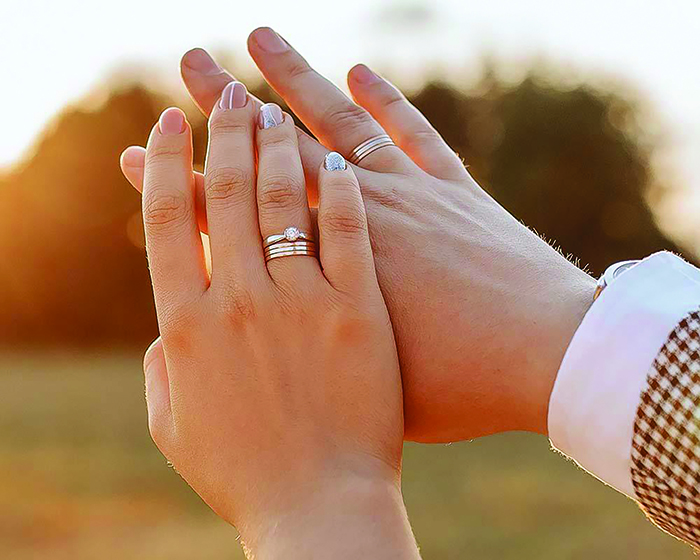
Engagement rings and wedding bands are one of the most notable aspects of the traditional wedding. They are also one of the most notable aspects to feel the shift from uniform to unique. Beginning with engagement rings, natural diamonds were once a staple of the standard proposal process. They still are, to a degree. However, more people are seeking alternatives. Some simply don’t feel that diamonds represent their partner, themselves, or their relationship as well as other gems do. Others want options that align better with their values, from environmental consciousness to a particular memory they share with their partner. Still others find more meaning in repurposing old jewelry or resetting family gemstones, officially inviting their partner to join their family and their history. Birthstones, lab-grown diamonds, sapphires of any color, generational diamonds and other gemstones—the list goes on. Whatever gem is chosen, the general idea—the reason for that choice—is the same: rather than follow others who chose a single symbol to represent each of their relationships, couples now seek rings that represent their own unique, intertwined stories.
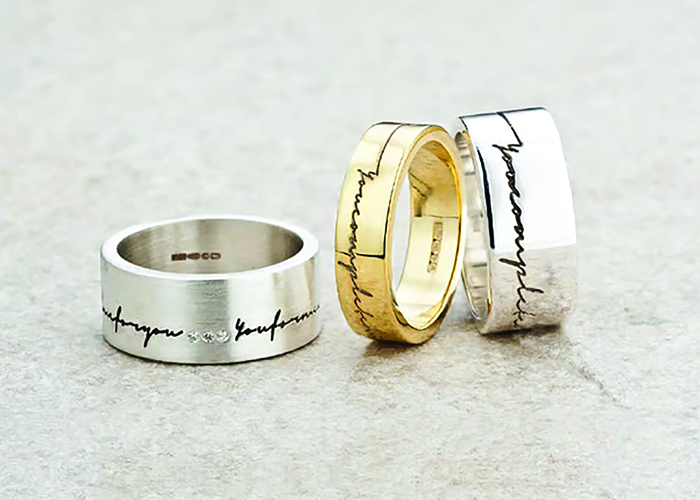
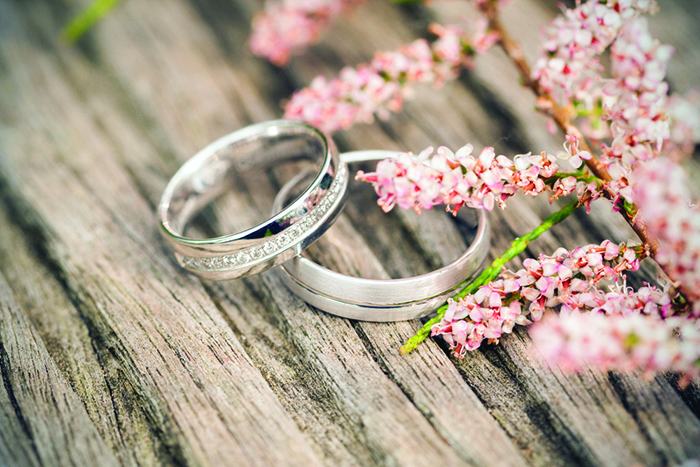
Engagement rings aren’t the only pieces to see this shift, either. Wedding bands have, as well. Some changes are as small as choosing less traditional materials (or combinations of materials), from rose gold and platinum to wood, or even animal bone. Other changes focus on practicality.
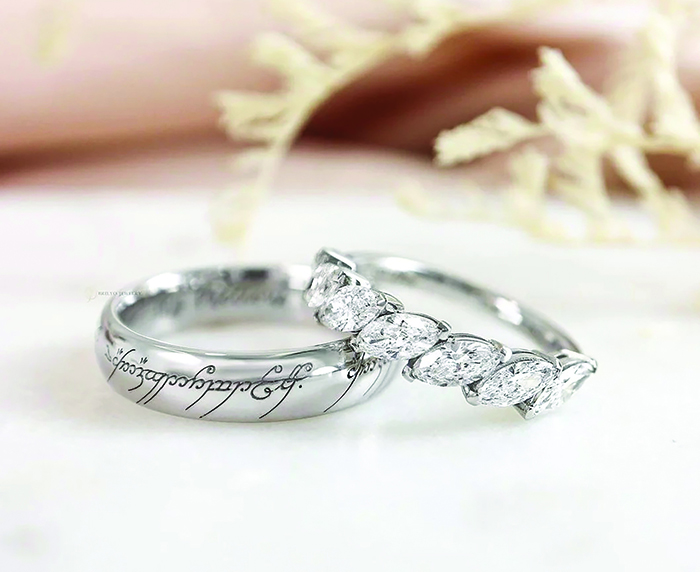
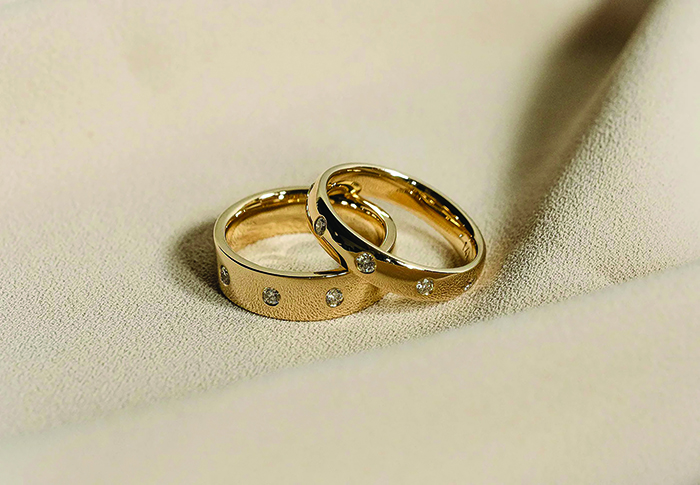
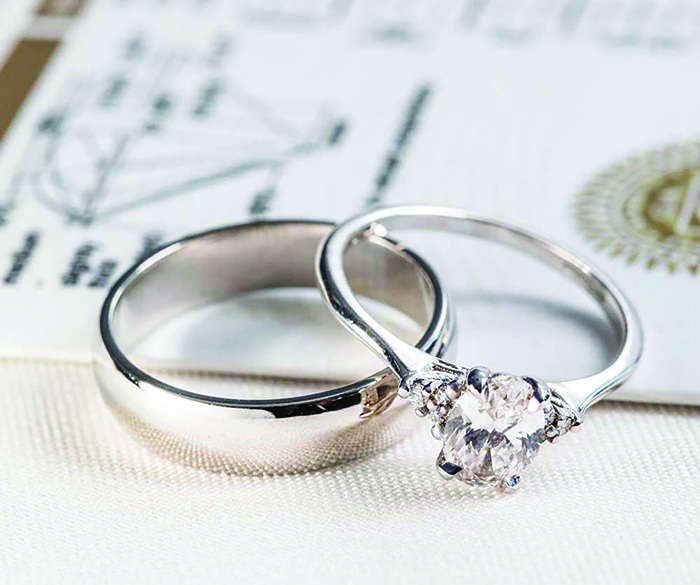
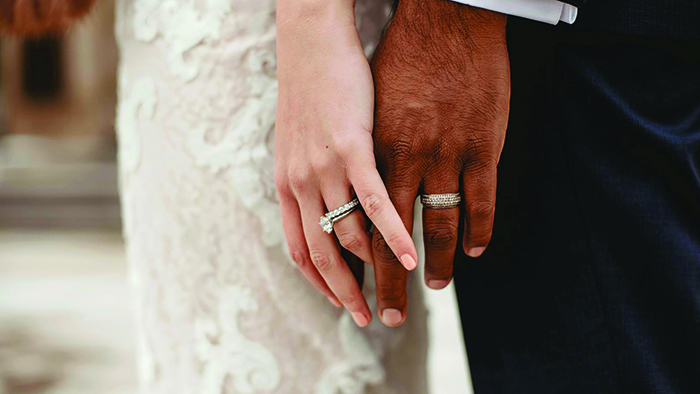
Rather than follow others who chose a single symbol to represent each of their relationships, couples now seek rings that represent their own unique, intertwined stories.
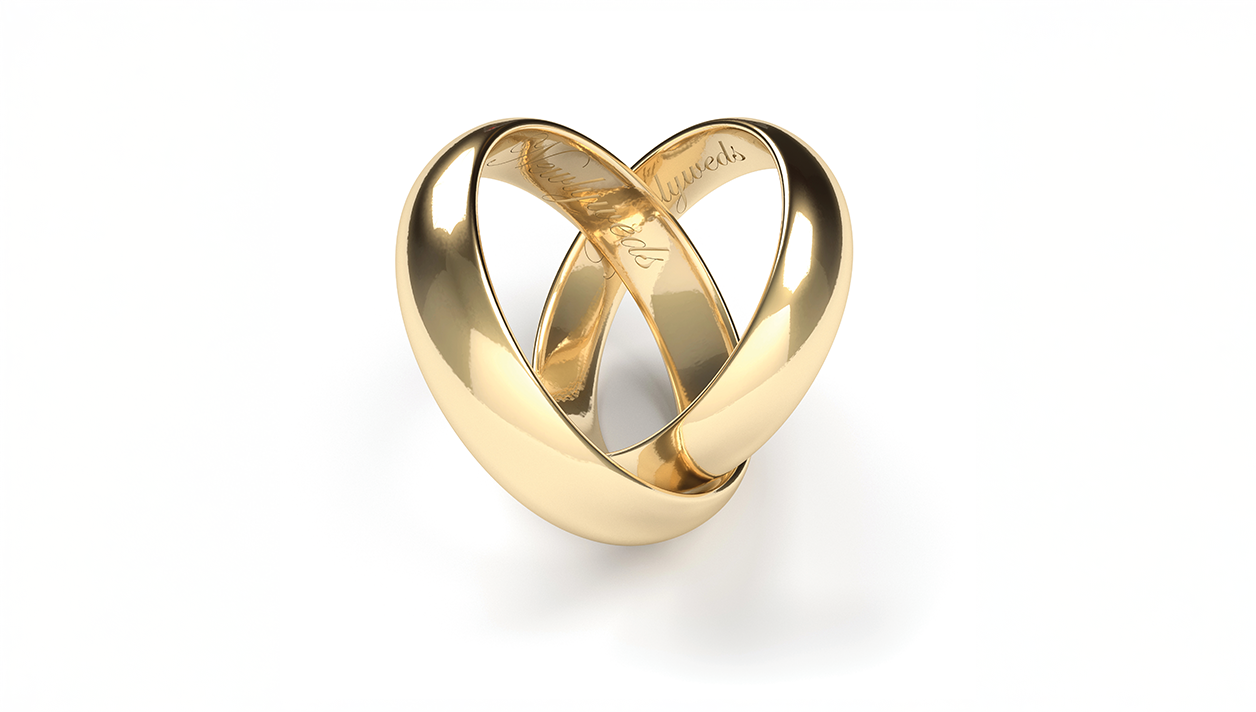
For instance, one partner’s work might involve heavy manual labor, making an overly intricate or fragile band less feasible for daily wear; meanwhile, the other’s work might require flexible hand movements, making a bulky or heavy-duty band inconvenient for them. Not only do distinct bands allow both partners to work freely, but they also operate as a testament to their own personalities and lifestyles—the special things they see and love in each other. Of course, the possibilities of wedding bands don’t end there: stackable rings couples can add to as their relationship progresses, customizations like fingerprints or engravings from precious moments or places in their lives, or even technology capable of storing medical information or recording wedding vows to be played later. The possibilities are endless, so why not find something that suits the best of you and your relationship?
The Custom Ensemble
Of course, rings are only one part of the wedding experience. What about the traditional white wedding gowns and the distinguished black tuxedos? They’re also changing. Both brides and grooms have found more ways to “wear themselves on their sleeves.” As with their rings, demonstrating one’s values through what they wear has become the trend. Many people scan social media for aesthetics that suit them—their own, custom assortment of inspiration instead of pre-made wedding plan packages. Sustainability, comfort, identity, event theming, and even re-wearability are factors they consider, as well. Some thrift their wedding wardrobe and find vintage accessories, and some upcycle or repurpose their own garments. Some, instead of sticking with one or two ensembles for the ceremony and reception, prefer having multiple outfit changes to last a weekend of celebrating with everyone.
The bride’s ensemble is perhaps one of the more visible examples of these shifts. As mentioned before, vintage or thrifted dresses have become more common. This is also true for selecting off-white colors such as ivory or cream for the ceremony. However, those options are just the tip of the iceberg. With styles like two-piece gowns or a focus on accessories like corsets or neck scarves, colors as gentle as pastel pink or as bold as black or red, and minimalist or maximist approaches to design, there’s no limit to what your dress can be except the “you” you want to show the world.
The same goes for the groom. They’ve seen a similar move from standard, clean-cut black and white to a variety of colors, materials, and embellishments. After all, the groom is just as important as the bride in marriage, so why not show that with a fit just as personalized to him as hers is to her? It doesn’t matter whether it’s closer to the traditional black tuxedo or whether it’s a blue silk suit with layered chains. What matters is whether you see yourself in whatever you decide.
Together as Two
Weddings, like marriages, are about two people making decisions together. These decisions include wedding planning. Whether you choose to follow tradition or to express your love in a way unique to you, those choices should be made as a couple. Communicating and embracing each other, along with each other’s thoughts and wishes, will only bring you closer. And isn’t that what being a couple truly means?