




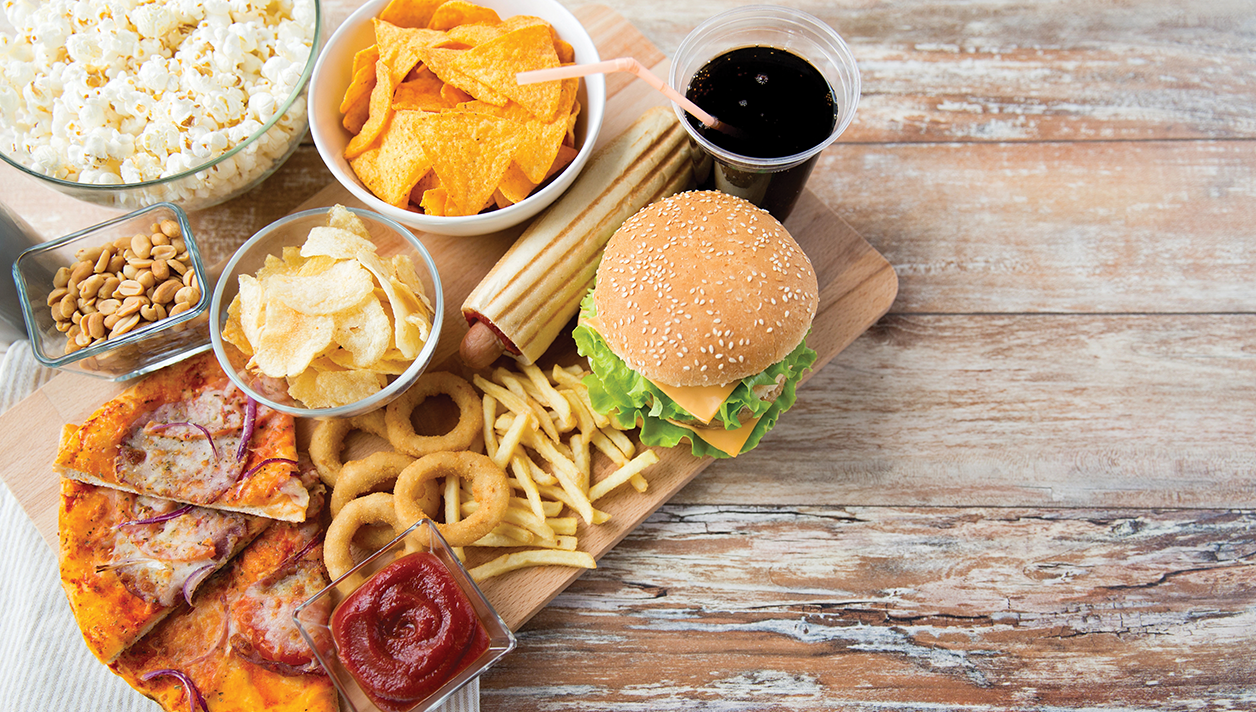
We Americans love fast food. And most of us also love food that is fast (there’s a difference).
Maybe it’s the youngster in us — excited to stop at a chain restaurant to eat foods we know aren’t good for us… yet they taste so good. That’s just human nature, right?
Of course, most of those fast foods have too much fat, salt, sugar and other questionable ingredients. Many are cooked in fryers or prepared in other ways that aren’t the healthiest. But it’s difficult to stop consuming them.

If you need a chemistry degree to understand an ingredient label, you’re probably holding an ultra-processed food (UPF).
UPFs aren’t just “cooked” or “canned.” They are industrial formulations — reconstructions of food derived from crops such as corn, soy and wheat. They’re chemically modified and then reassembled.
Most contain additives you won’t find in your own kitchen — high-fructose corn syrup, hydrogenated oils, protein isolates and cosmetic agents such as emulsifiers and artificial flavors. Think frozen pizzas, sugary cereals, mass-produced breads and diet or regular soda pop.










Unbelievably, UPFs now make up 62% of the calories average Americans consume daily, says the website Food Tank. A whopping 73% of items on grocery store shelves are ultra-processed foods.
We know better — so why do we consume so many foods that aren’t good for us?
FIRST, UPFs are engineered for what’s known as “hyper-palatability.” Simply put, they taste good. After extensive research, food scientists have learned the precise “bliss points” of salt, fat and sugar that override our senses. You can’t eat just one potato chip because they’re designed to be impossible to quit.
SECOND, highly processed foods are an economic inevitability for many people. UPFs can be produced cheaply and have a long shelf life, while healthier items such as produce and fruit remain comparatively expensive and perishable.
LASTLY, these foods are convenient. Folks are overworked and short on time, so a shelf-stable, ready-to-eat food is often an acceptable choice. We’re not just eating food; we’re eating industrial convenience that’s been aggressively marketed to us as comfort.
I’m a dandy one to talk — my wife and I operated a casual restaurant selling pizzas and baked grinder sandwiches in Fenton for 17 years! (We offered healthy salads and other tasty items, too.) So why am I complaining or pointing fingers now?
Actually, I’m not against UPFs. The simple, honest answer is that we all should eat a balance of good foods along with some that aren’t so good for us.
Moderation is almost always the key.
Until we value time and health over speed and profit, ultra-processed foods will remain the American standard — and that hasn’t changed in 100 years.
I never knew my great-grandmother, but I learned a great deal about food from her daughter, my grandmother. Yes, the late Mary Rummel fried foods — but not many. She prepared simple, small servings of fresh food. She loved and used butter and cream, but everything she made was in moderation. I can still taste some of her delicious desserts in my mind.
Here’s a rule I consider whenever I stand bewildered in a grocery store aisle, staring at some new food product: Would Mary Rummel and other grandmothers recognize this item? If they wouldn’t, it’s likely not good for us.
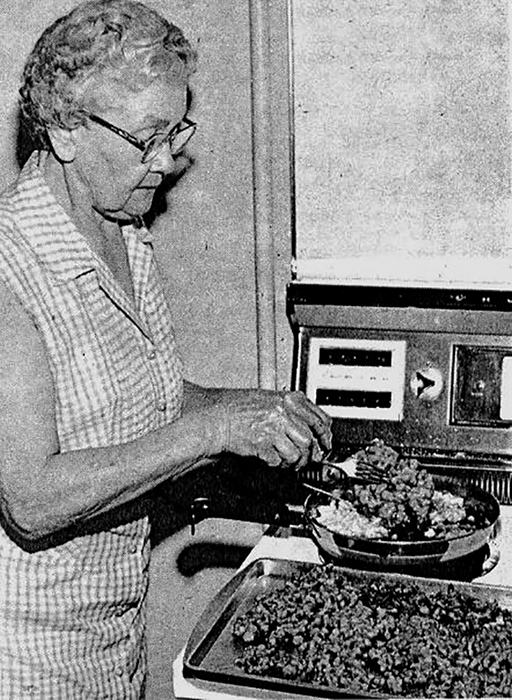
People who make New Year’s resolutions for 2026 usually want to “lose weight, eat healthy and get more sleep,” among other wishes. Our grandmothers would recognize those goals — and they’d prepare simple food accordingly, and often deliciously.