




The Beginning:
Homeostasis
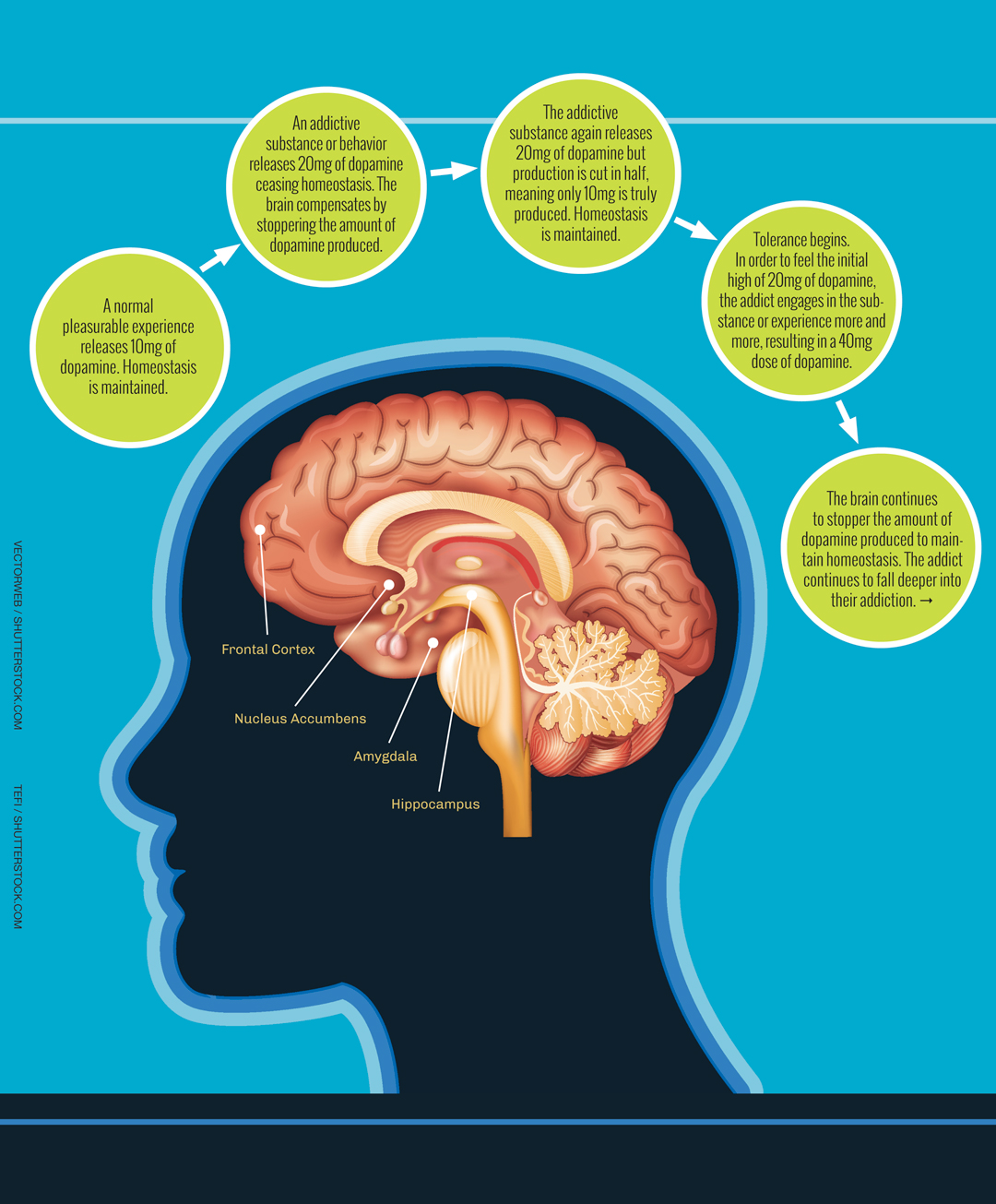
The brain is working normally, releasing dopamine at healthy levels. Normal activities produce a standard feeling of pleasure.
STEP 1: An addictive substance or behavior is introduced. An overwhelming amount of dopamine (and other transmitters) is released quickly into the nucleus accumbens (the brain’s pleasure center). At the same time, the hippocampus constructs a memory of the pleasurable experience and the amygdala begins to fashion a conditioned response to the external stimuli associated with the feeling of intense pleasure – allowing the person to be able to find the experience again.

STEP 2: In order to regain homeostasis, the body adapts to the onrush of dopamine by stoppering the amount of dopamine produced or closing off dopamine receptors. With repeated exposure to the addictive behavior, common experiences (such as the laughter of a daughter) no longer produce enough dopamine to be considered pleasurable. The hippocampus and the amygdala continue to fashion a strong memory and conditioned response to the external addictive stimuli.
STEP 3: After a time, the brain becomes dependent upon the addictive substance or behavior to maintain homeostasis. Normal pleasurable experiences no longer feel pleasurable or rewarding. The hippocampus and amygdala have constructed a conditioned response to external stimuli that is insatiable. The cessation of the addictive behavior is now met with symptoms of withdrawal and a lifetime need for the addictive substance or behavior begins. This process eventually begins to disrupt thought in the pre-frontal cortex, causing a lack of control in behavior. The addictive substance or behavior is now seen as a reward.










References:
Goldstein, R. Z., & Volkow, N. D. (2011). Dysfunction of the prefrontal cortex in addiction: Neuroimaging findings and clinical implications. Nature Reviews Neuroscience, 12(11), 652-669.
Grant, J. E., Potenza, M. N., Weinstein, A., & Gorelick, D. A. (2010). Introduction to behavioral addictions. American Journal of Drug and Alcohol Abuse, 36(5), 233-241.
Kowalczyk, D. (2018). Withdrawal: Symptoms and definition. Study.com. Retrieved from study.com/academy/lesson/withdrawal-symptoms-definition-quiz.html.
National Institutes of Health. (2018). Biology of addiction: Drugs and alcohol can hijack your brain. News in Health. Retrieved from newsinhealth.nih.gov/2015/10/biology-addiction.